
Food Grade Belt Conveyors
Match a food-grade belt conveyor's carrying surface to the food, its packaging and the cleaning process. Our food conveying options include plastic-chain flexible lines and modular-belt lines.
Use the surface-selection guidance below to describe food contact, product support, temperature and cleaning requirements. These details identify the conveying material and equipment configuration to discuss for your application.
Discuss Your Food Conveying Surface
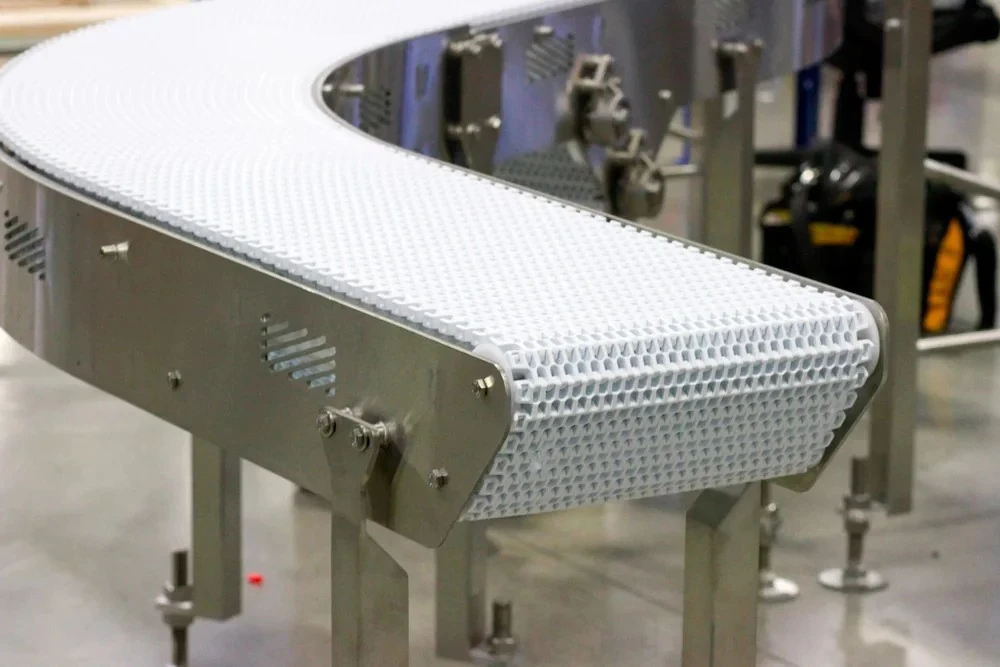
Select the Conveying Surface for a Food Belt Conveyor
Choose the conveying surface together with the product support and route requirements. Our food conveying options include plastic-chain flexible lines and modular-belt lines. Compare the modular belt conveyor range and turning modular belt conveyor; for a flexible plastic-chain layout, review the flexible chain conveyor range and the plastic chain conveyor system.
Describe the food type, whether contact is direct or through packaging, the product base, size and weight, product temperature, contact duration and cleaning process. State whether the route is straight, turning or changes level. The proposal should identify the selected conveying material and the components it covers. Describe water and residue exposure, and give the cleaning agents, their temperatures and contact times.
FDA-related material documents are available after you contact us for the selected plastic-chain or modular-belt conveying materials. Send the food, surface and operating requirements to discuss the material selection and request those documents.
Identify What Touches the Conveying Surface
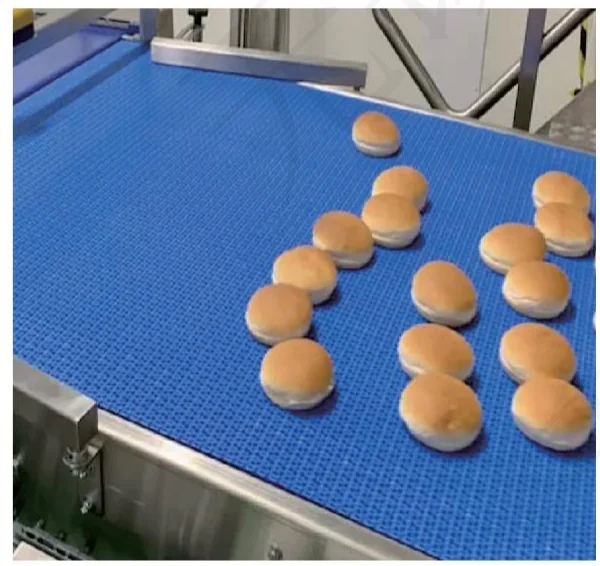
Start with the product's condition at this part of the line. A bare food product, a container and a sealed package create different contact and support requirements.
| Product Condition | Contact and Support to Identify | Material Review Inputs |
|---|---|---|
| Food in direct contact | Identify every conveying surface that touches the food, including transfer points and any guides in contact with it. | Food type, contact duration, product temperature and the cleaning process for the selected contact components. |
| Food in a container or tray | Show the container base, its loaded shape and the points where it is supported or guided. | Container dimensions and weight, any exposed food or spillage, and the operating and cleaning conditions. |
| Sealed packaged food | Check the package base and wrapper at the carrying surface and machine transfers. | Smallest and largest loaded packages, underside photographs, transfer geometry and the cleaning requirements. |
A flexible bag and a rigid box present different supporting bases at a transfer, even when their overall dimensions are similar.
Compare Plastic-Chain and Modular-Belt Arrangements
Choose the support and route together, then confirm the conveying material for the application.
- Plastic chain flexible conveyor system: review the chain surface and guide arrangement through straight sections, bends and machine handoffs. The product base and the selected chain assembly determine the support to check.
- Straight-running modular belt conveyor: review the selected modular surface for a straight route and the support available at each end transfer.
- Turning modular belt conveyor: review the turning space, product orientation and support through the curve and its entry and exit.
Flat, open-grid and raised-rib modular surfaces have different contact geometries. Their transfers need the matching belt and end arrangement. Compare the construction and route options in the modular belt conveyor range.
Connect the Material Documents to the Selected Components
The proposal should identify the conveying material and the components it covers. Keep the food-contact surface, frame and other contact parts distinct when reviewing the selection.
- Record the selected plastic-chain or modular-belt material and the relevant component reference.
- Provide the food, contact duration, temperature and cleaning conditions for that selection.
- Check the supplied material documents against the components selected for the proposed conveyor.
FDA-related documentation for the selected plastic conveying materials is available privately after you contact us. The material selection and its documented scope need to be considered with the operating conditions of your application.
Coordinate the Surface With the Line Layout
This page focuses on the carrying surface, food contact and material-document scope. For the flow between processing, inspection and packaging machines, use our food conveyor system planning page. Include the same product conditions in both the surface selection and the machine-interface layout.
Discuss Your Food Conveying Surface. Send the food or package details, the proposed route and the contact, temperature and cleaning requirements so the material and equipment configuration can be reviewed together.