

MATCHING THE CONVEYOR TO THE PACKAGE
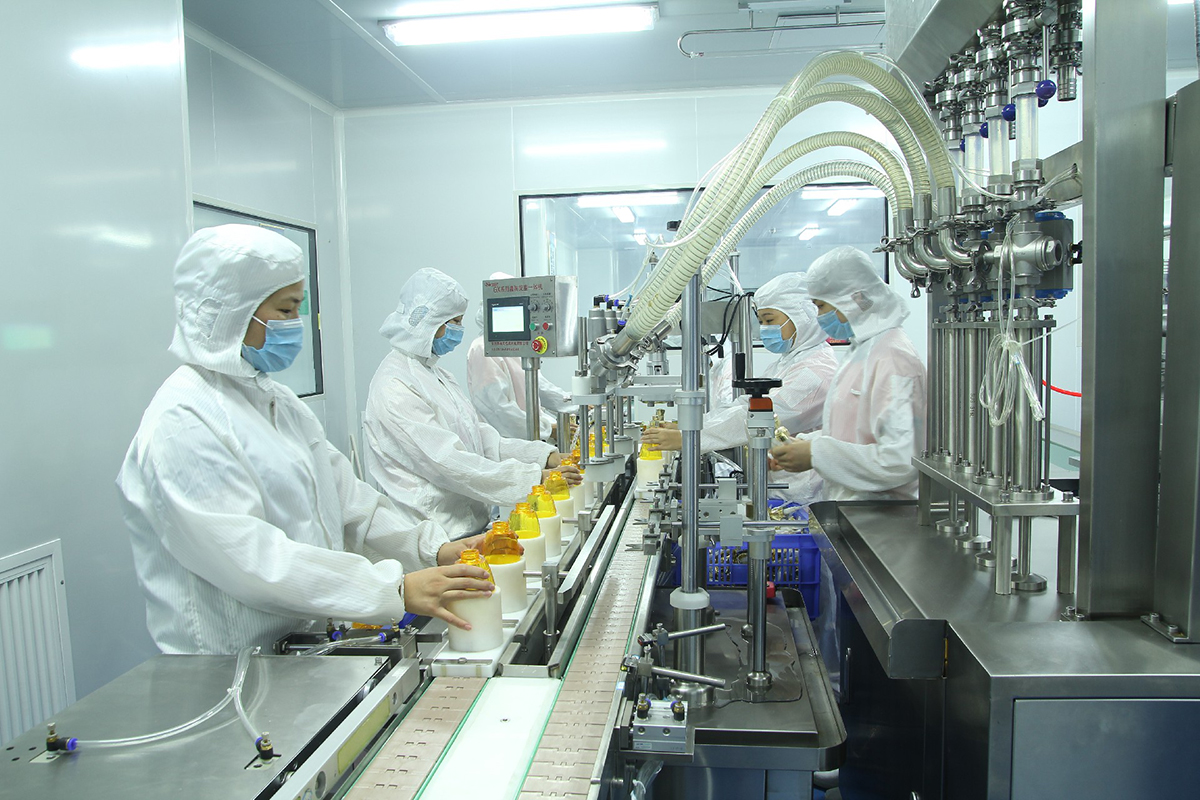
Stable bottles, jars and cartons can often run directly on flat-top or flexible chain conveyors. Flexible chain systems are particularly useful for compact connections between fillers, cappers, labellers and packaging machines, but narrow chains are not suitable for every product.
Tall bottles, reverse-taper containers and packages with small or irregular bases may require wider support, shorter transfer gaps or dedicated carriers. Tubes, pouches and lightweight cartons are normally better handled on modular or full-width belts.
Pucks can provide a common conveyor interface for unstable containers and improve positioning at automated stations. They should only be used where these benefits justify the added carrier-return loop, storage, cleaning and changeover requirements.
PROTECTING THE PACKAGE AND BALANCING THE LINE
Accumulation strategy depends on the package:
- contact accumulation for stable, abrasion-resistant containers;
- low-pressure accumulation for decorated bottles, tubes and lightweight cartons;
- zero-pressure or non-contact buffering where glass containers, premium finishes or unstable packages cannot tolerate contact.
Buffering should be placed between machines whose normal short stops would otherwise interrupt the complete line. Extra conveyor length in the wrong location does not improve output and may only increase product contact and work-in-progress.
CSTRANS supplies flexible chain, flat-top chain and modular belt conveyors together with adjustable guides, transfers, lane-control sections and custom handling components.
Before the layout is finalized, we test the smallest and largest SKUs in both empty and filled conditions. We also check container stability after cap or pump installation, guide-adjustment range, transfer performance, label orientation, sensor detection and the risk of surface marking during accumulation.
The result is a conveyor system designed around the complete SKU range and machine sequence—not one container tested in isolation.


