

DIRECT CONVEYING OR PALLET TRANSPORT
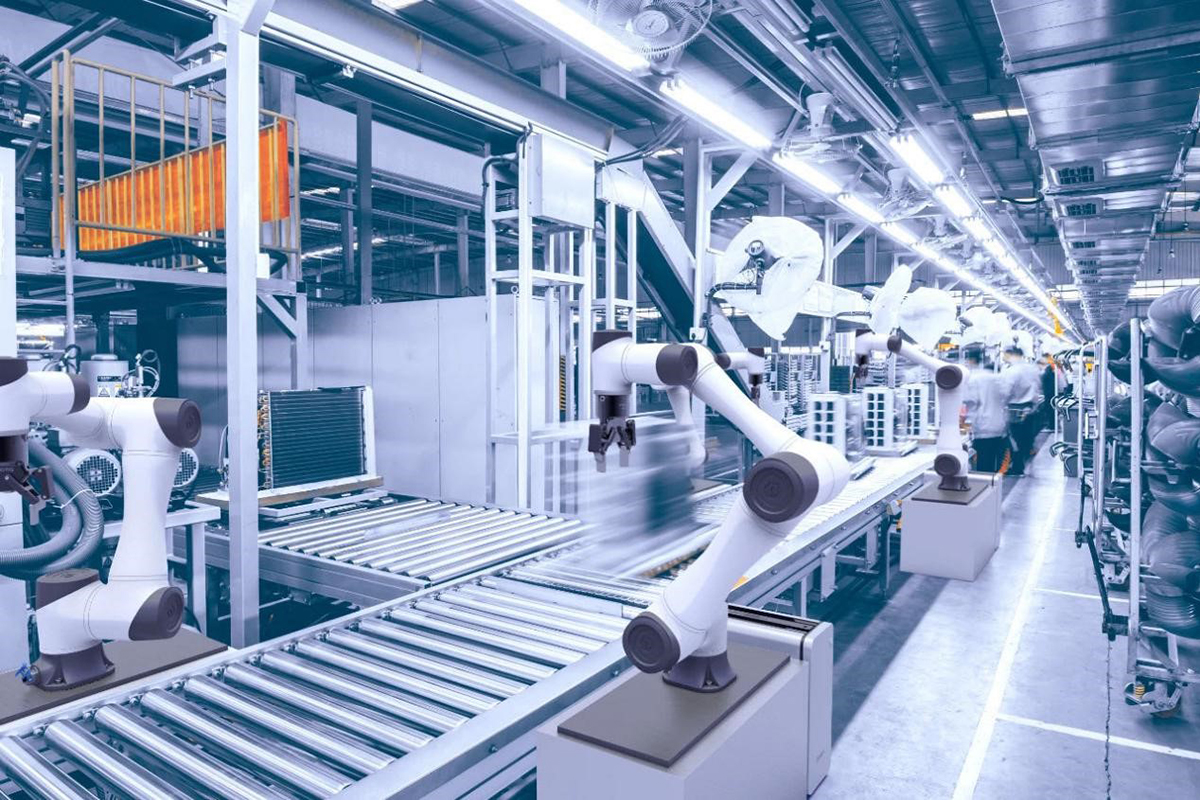
Stable products can often be transported directly on flexible chain, flat-top chain or modular belt conveyors. Direct conveying provides compact routing and straightforward connections between machines.
Pallet or carrier systems are more suitable when the process requires:
- repeatable product orientation;
- automatic assembly or testing;
- individual product identification;
- precise locating at workstations;
- multiple processing routes;
- rework and bypass loops.
The conveyor transports the pallet between stations, while dedicated stop and locating units establish the final process position.
LINE BALANCING AND PROCESS CONTROL
The slowest operation determines the sustainable output of the line. Increasing conveyor speed cannot correct an unbalanced assembly or inspection process.
CSTRANS can integrate:
- pallet stops and locating units;
- accumulation before variable-cycle stations;
- lift-and-transfer modules for parallel processes;
- merging, dividing and bypass sections;
- rework and reject routing;
- sensor and RFID interfaces;
- direct and palletized conveying within one system.
Before the layout is finalized, the product range, carrier load, station interfaces, cycle times, fault-recovery sequence and required work-in-progress are checked together.
The objective is a controlled single-piece flow that keeps each process supplied without creating unnecessary accumulation between stations.


