
PVC and PU Belt Conveyors
PVC and PU belt conveyors use a driven belt to carry products. The belt forms the contact surface, the frame supports the conveyor, and the end-transfer arrangement connects it to the next operation. Belt material, product support and the route need to be considered together. For an existing continuous belt, use the PVC replacement belt identification guide to prepare the dimensions and photographs separately from a complete conveyor enquiry.
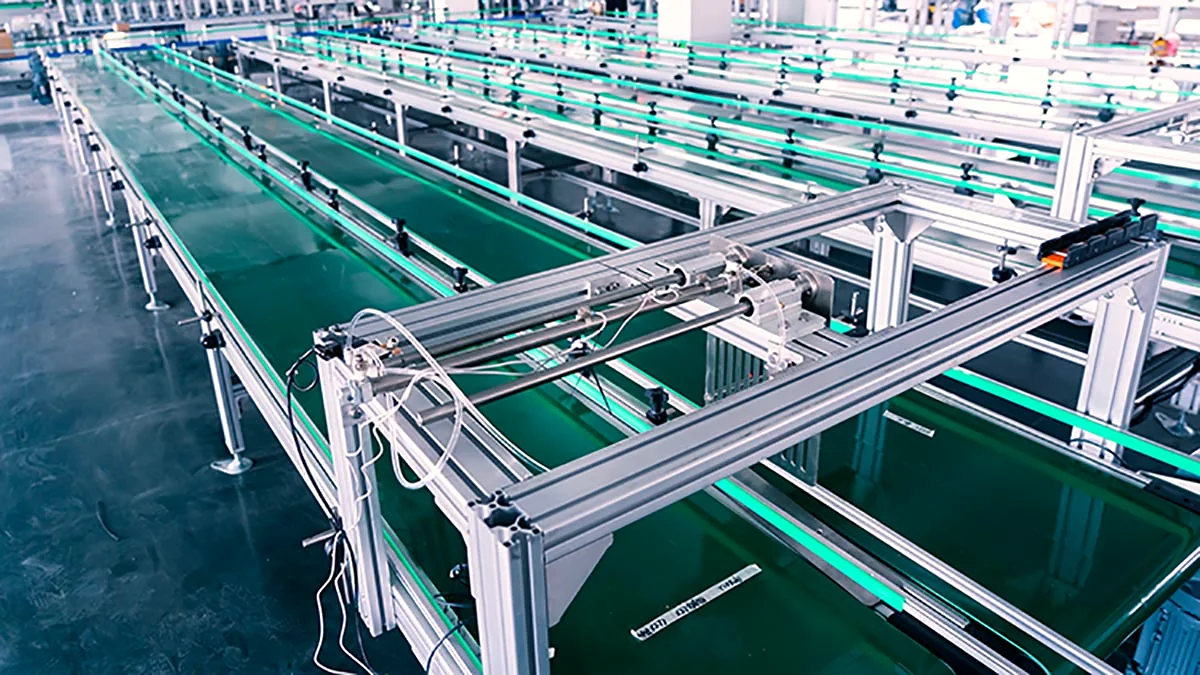
CSTRANS PVC and PU Belt Conveyors
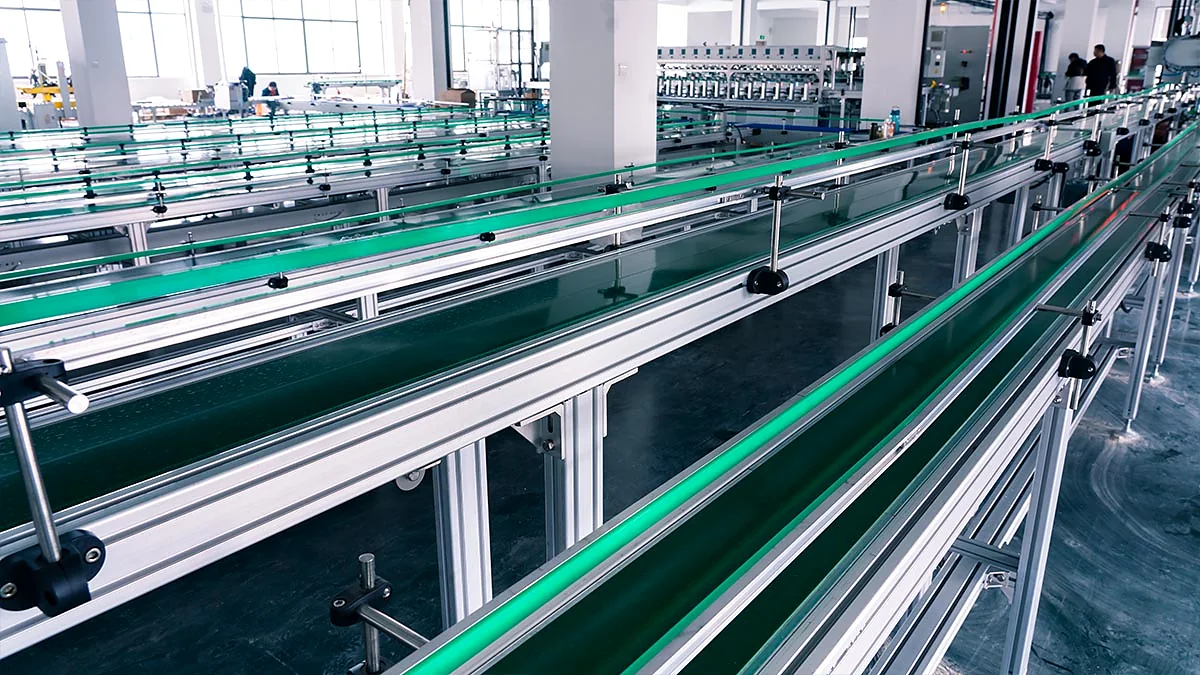
Our belt conveyor has PVC (polyvinyl chloride) and PU (polyurethane) belt options. Related loading and unloading equipment is also part of the range.
Belt Support and Drive
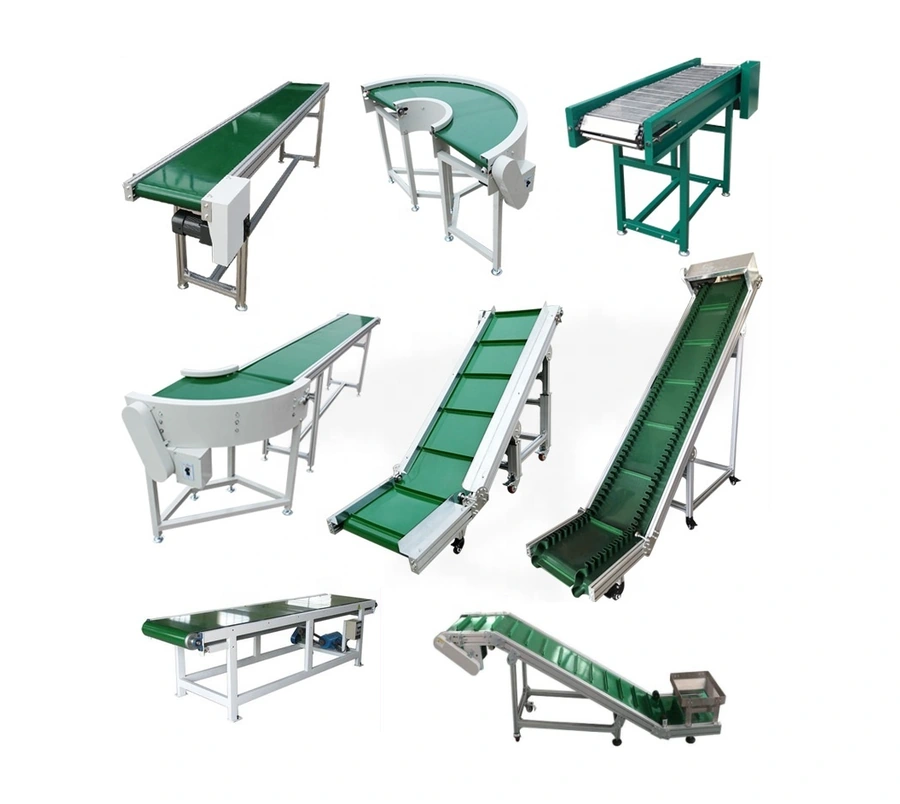
A conventional flat-belt conveyor circulates the belt around a drive pulley and an end pulley, with a tensioning arrangement maintaining the required belt tension. A slider bed or carrying rollers support the loaded run; the return run brings the unloaded belt back beneath it.
The drive pulley transmits force through contact with the belt. Belt wrap and tension affect force transfer, while pulley alignment affects belt tracking. The support arrangement also contributes resistance to movement, so the belt, supporting surface and drive are selected together for the load. This construction needs to be considered alongside the material's suitability for product contact.
Belt Material and Operating Conditions
PVC and PU identify material families. Suitability depends on the specific belt grade, surface and operating conditions. Sealed packages and exposed products create different contact requirements; cleaning adds its own temperature and chemical exposure.
| Selection Factor | Effect on the Belt Specification | Application Details |
|---|---|---|
| Direct product or packaged load | Effect on the Belt SpecificationExposed product touches the belt material directly; a sealed package provides the contact surface instead. The selected grade must suit that contact requirement. | Application DetailsProduct or package details and a photo of the contact surface. |
| Moisture, oil and residue | Effect on the Belt SpecificationSurface contamination can change how a product grips or releases from the belt. The belt grade also needs chemical compatibility with what reaches it. | Application DetailsThe substances present, their condition and how long the belt is exposed. |
| Temperature and cleaning | Effect on the Belt SpecificationCleaning can expose the belt to different temperatures and chemicals from production. Both conditions need to fit the selected grade. | Application DetailsOperating and cleaning temperatures, cleaning agents, concentration and contact time. |
| Existing equipment | Effect on the Belt SpecificationBelt flexibility must suit the pulleys and end-transfer arrangement. A close transfer can require a different belt and end design. | Application DetailsCurrent belt specification, pulley/end details and connecting equipment. |
Your enquiry can include the material documentation required for the application.
Inclines and End Transfers
On a level connection, the product needs support along the carrying surface and across the hand-offs. On an incline, grip and stability also matter because the product must stay in position on the slope. For a given lift height, a shorter horizontal run creates a steeper incline.
At a transfer, the belt turns around the end pulley while the product moves onto the receiving surface. The smallest supporting footprint, transfer gap and travel direction determine how much support remains. Small items may need a closer transfer arrangement, so the belt and end geometry need to be selected together.
Telescopic Loading and Unloading
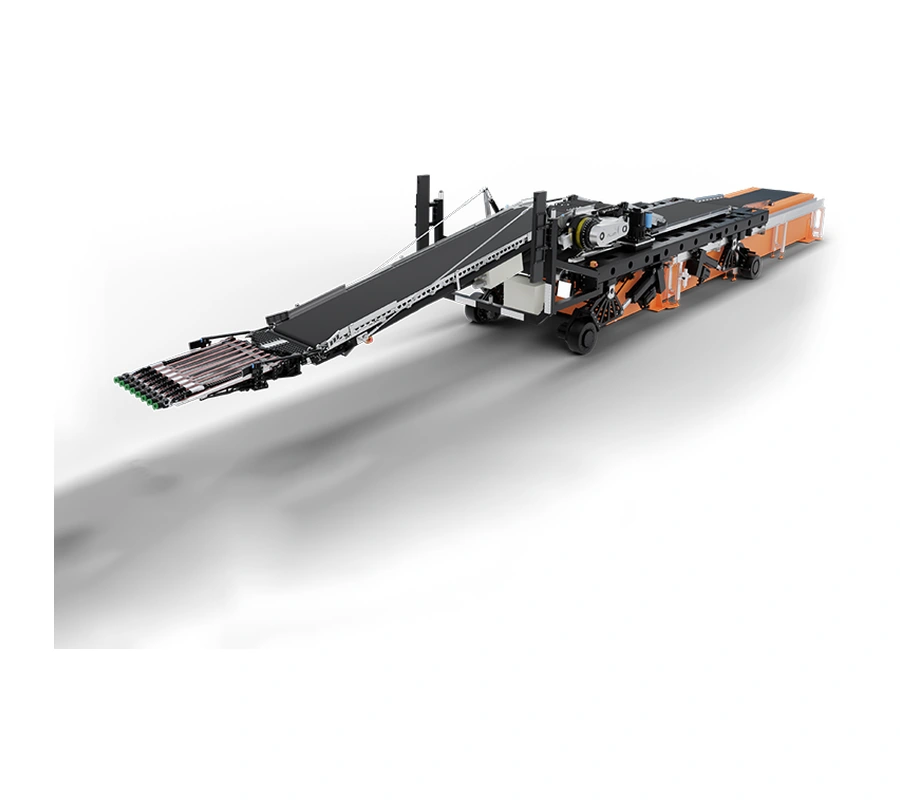
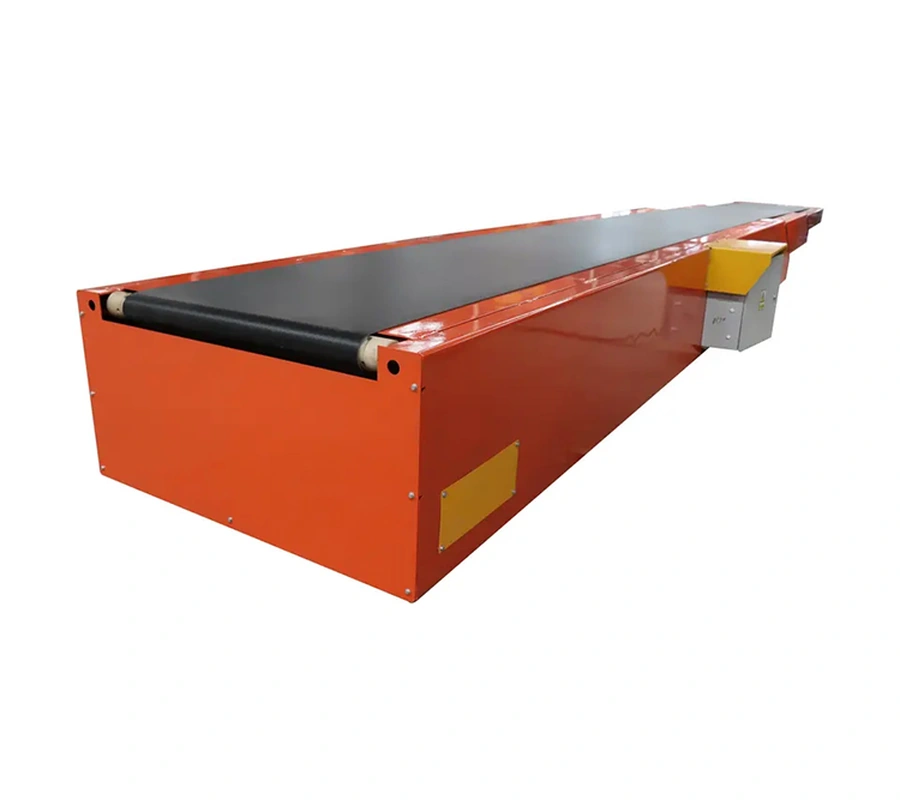
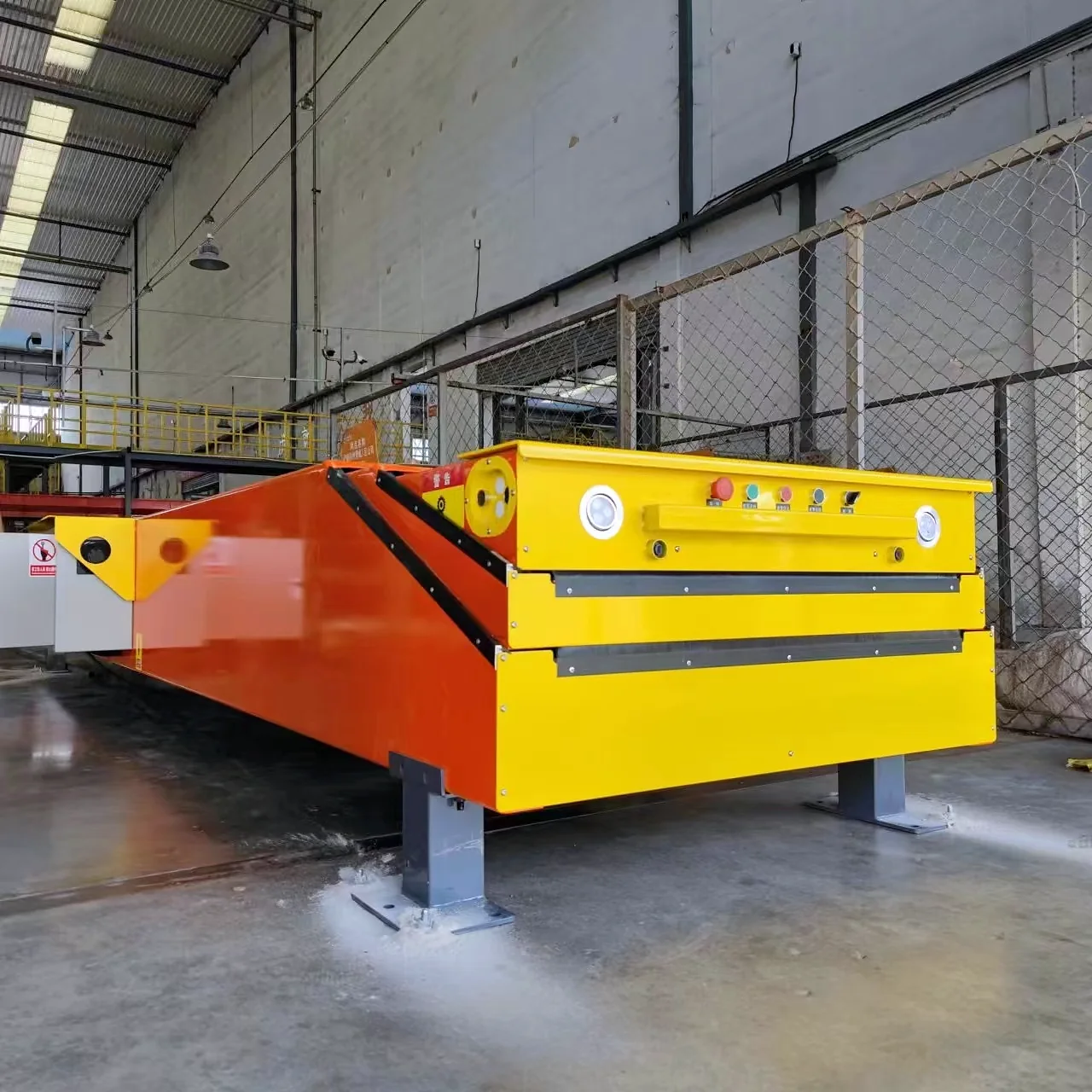
A conveyor between fixed workstations serves defined entry and exit points. The movable telescopic belt conveyor extends and retracts along its length to move the loading or unloading point. It is a related option for vehicle loading and unloading where the required reach changes. Its layout needs to allow for both extended operation and retracted storage, together with the transfer height and package dimensions.
Movable Telescopic Belt Conveyor Specifications
| Parameter | Specification |
|---|---|
| Belt Widths | 600 / 800 / 1,000 mm |
| Conveying Speed | 25–45 m/min, frequency-controlled |
| Extension and Retraction Speed | 5–10 m/min, frequency-controlled |
| Carrying Capacity | 60 kg/m² |
| Three-Section Power | 2.2 / 0.75 kW |
| Four-Section Power | 3.0 / 0.75 kW |
| Front Controls | Forward, reverse, start, stop and emergency stop |
| Front Lighting | Two LED lights |
Loading and Unloading Robot
The loading and unloading robot handles boxed products for container, truck and warehouse operations. It combines machine vision, automatic control and a mobile base with independent four-wheel drive.
| Parameter | Specification |
|---|---|
| Loading and Unloading Rate | Up to 1,000 boxes/hour |
| Conveying Speed | Up to 1 m/s |
| Maximum Single-Box Load | 25 kg |
| Vehicle Travel Speed | Up to 0.6 m/s |
| Rated Input Voltage | AC 380 V |
| Compressed Air | At least 0.5 MPa |
| Battery | 48 V / 100 Ah lithium-ion |
Request a Belt Conveyor Quote
For a quotation, send product dimensions, loaded weights and the required rate with a layout showing length, width, height changes and each connection. Base photos and a description of where products stop or wait help explain the transfer requirements.
Contact CSTRANS
Leave Your Message
Our modular belt conveyors cover plastic modular belt routes. Further equipment types are available in the conveyor systems range.
This page covers complete PVC and PU belt conveyors. For a replacement continuous belt, send the belt specification, width and length, with pulley and end-transfer photographs. For replacement plastic modular belts or modules, use the component catalogue and include the series, pitch, width and drive-sprocket photographs.