
Bucket Conveyors and Z-Type Elevators
Bucket conveyors carry loose material in a series of buckets. A bucket elevator raises that material between processes. Our Z-type bucket elevator combines a lower feed point, a vertical lift and an elevated discharge.
Request a Bucket Elevator Quote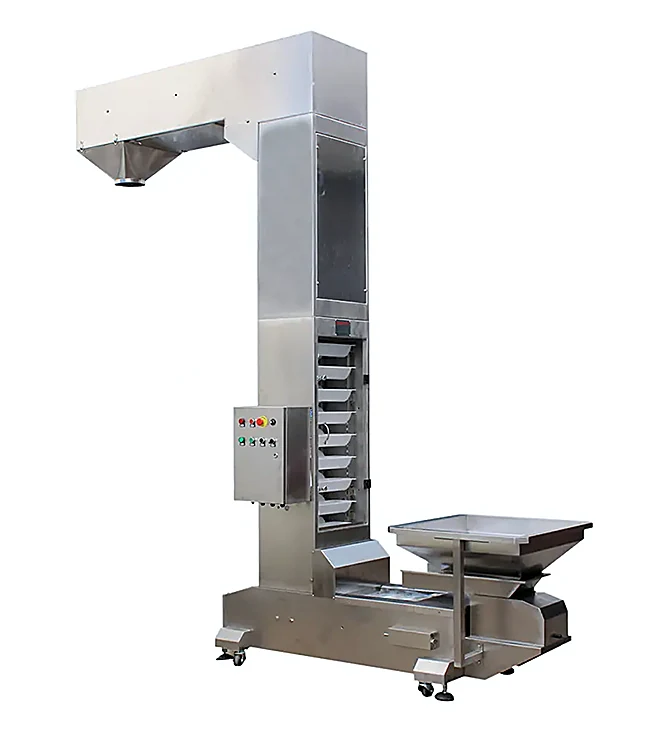
CSTRANS Z-Type Bucket Elevator
Our Z-type bucket elevator has horizontal entry and discharge sections connected by the vertical lifting section. Its arrangement depends on the feed position, lifting height, discharge position and available space.
| Parameter | Specification |
|---|---|
| Lift Type | Z-Type |
| Material | Mild Steel |
| Conveying Speed | 0–1 m/s |
| Power | 6 HP |
| Voltage | 230 V |
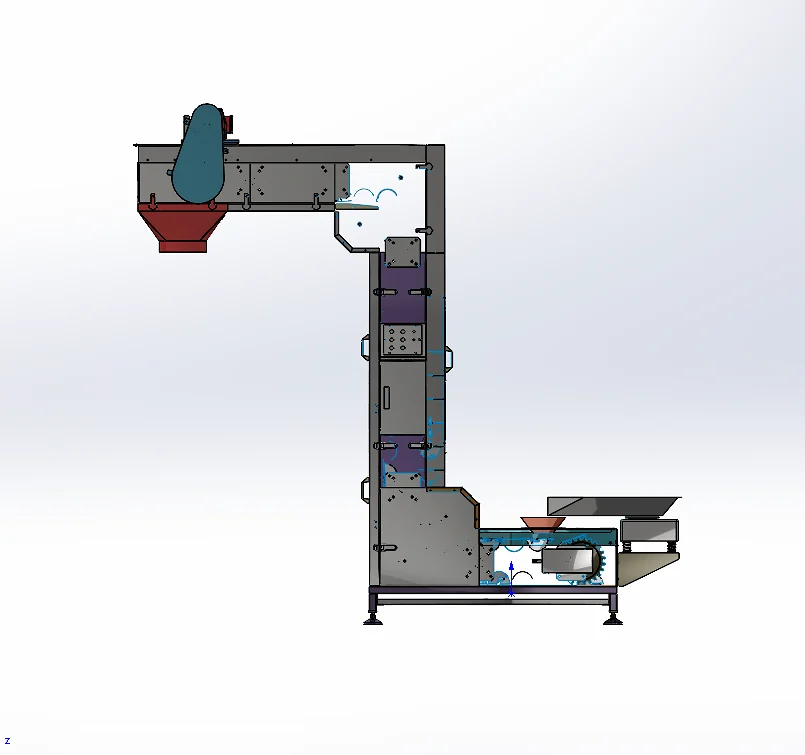
Material enters the buckets at the lower feed section and remains supported inside them during the lift. At the upper outlet, the buckets empty into the receiving process and return through the conveyor circuit. The inlet, buckets and discharge opening must work together: the feeder controls how material enters, and the outlet must allow each bucket to empty.
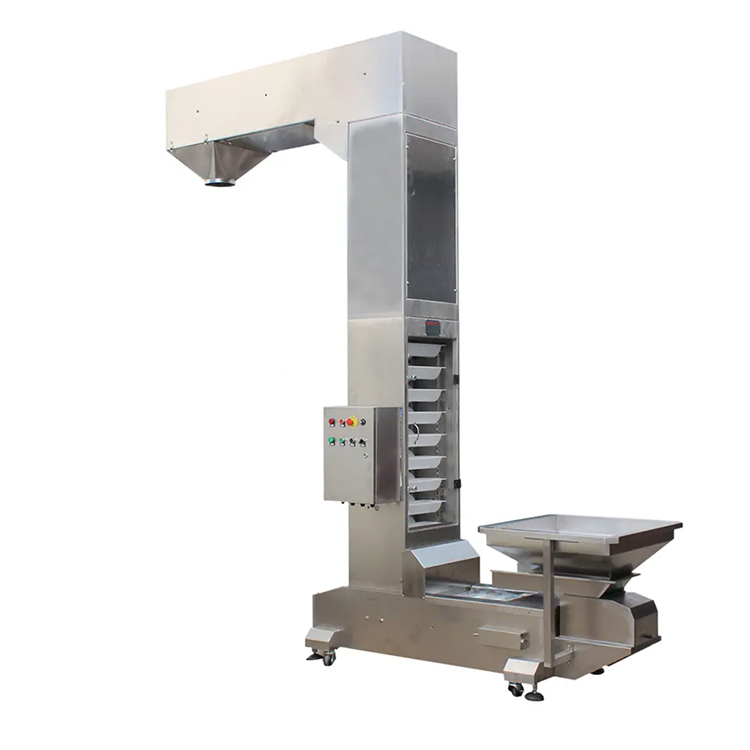
Z Type Bucket Lifts Elevator Belt Vertical Conveyor
Material Condition and Feed Rate
Particle size, moisture and stickiness affect how material enters and empties from the buckets. Fragile products need particular attention at feeding and discharge. The particle-size range and tendency to clump or break are useful starting points for selection. Photographs should show the material in its usual condition and any changes that occur during production.
Batch feeding and continuous feeding place different demands on the inlet. A steady feed distributes material among the passing buckets. A short surge can exceed the space available at the inlet even when the average hourly output appears suitable. The feeder's delivery pattern therefore needs to match the bucket movement and usable fill volume.
Normal and peak feed rates, with units, describe those demands more clearly than average output alone. Material bulk density also matters when converting a volume of filled buckets into a weight-based output. The feeding equipment and its delivery pattern are part of the conveyor specification.
Discharge and Cleaning Requirements
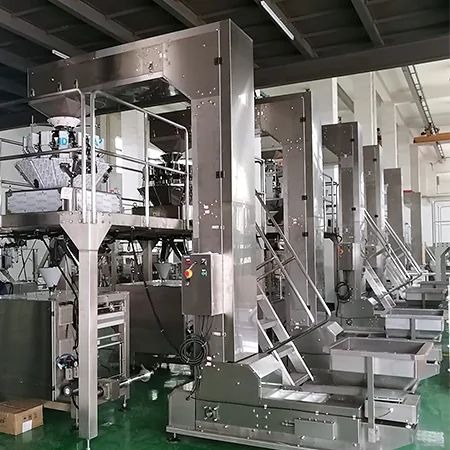
The discharge must suit the next process, such as a hopper, weighing station or another conveyor. Its receiving opening and working height define the connection. The flow also needs to match how that equipment accepts material, as a steady stream or an intermittent batch.
Product breakage, residue and cleaning between materials affect the choice of material-contact parts and the cleaning approach.
Material left in a bucket after discharge takes up space on its next pass and can carry into a later batch. Sticky or clumping products therefore need particular attention to emptying and access for cleaning. For fragile material, the drop into the bucket and the drop into the next process are separate handling points to assess.
Request a Bucket Elevator Quote
For an enquiry, send material photos and a layout marking the feed point, lifting height, discharge point and available space. Include normal and peak feed rates, the feeding and receiving equipment, and any breakage, residue or cleaning concerns.