What Does “Chain” or “Belt” Describe?
First identify what touches the product. A chain conveyor may carry it on linked plastic tops or metal slats. A belt conveyor may use a continuous sheet or a belt assembled from plastic modules and connecting rods. “Chain” does not automatically mean a metal surface, and “belt” does not always mean a continuous sheet.
The drive mechanism is a separate question. A chain transmitting power from a motor to a shaft does not make the conveyor’s carrying surface a chain. Many continuous flat belts are driven through friction at a pulley, while modular plastic belts commonly engage sprockets. Some continuous monolithic belts also use positive drive. Check the actual construction before using drive type as a selection rule.
Compare the Carrying Surfaces
| Surface | Where It May Fit | What to Verify |
|---|---|---|
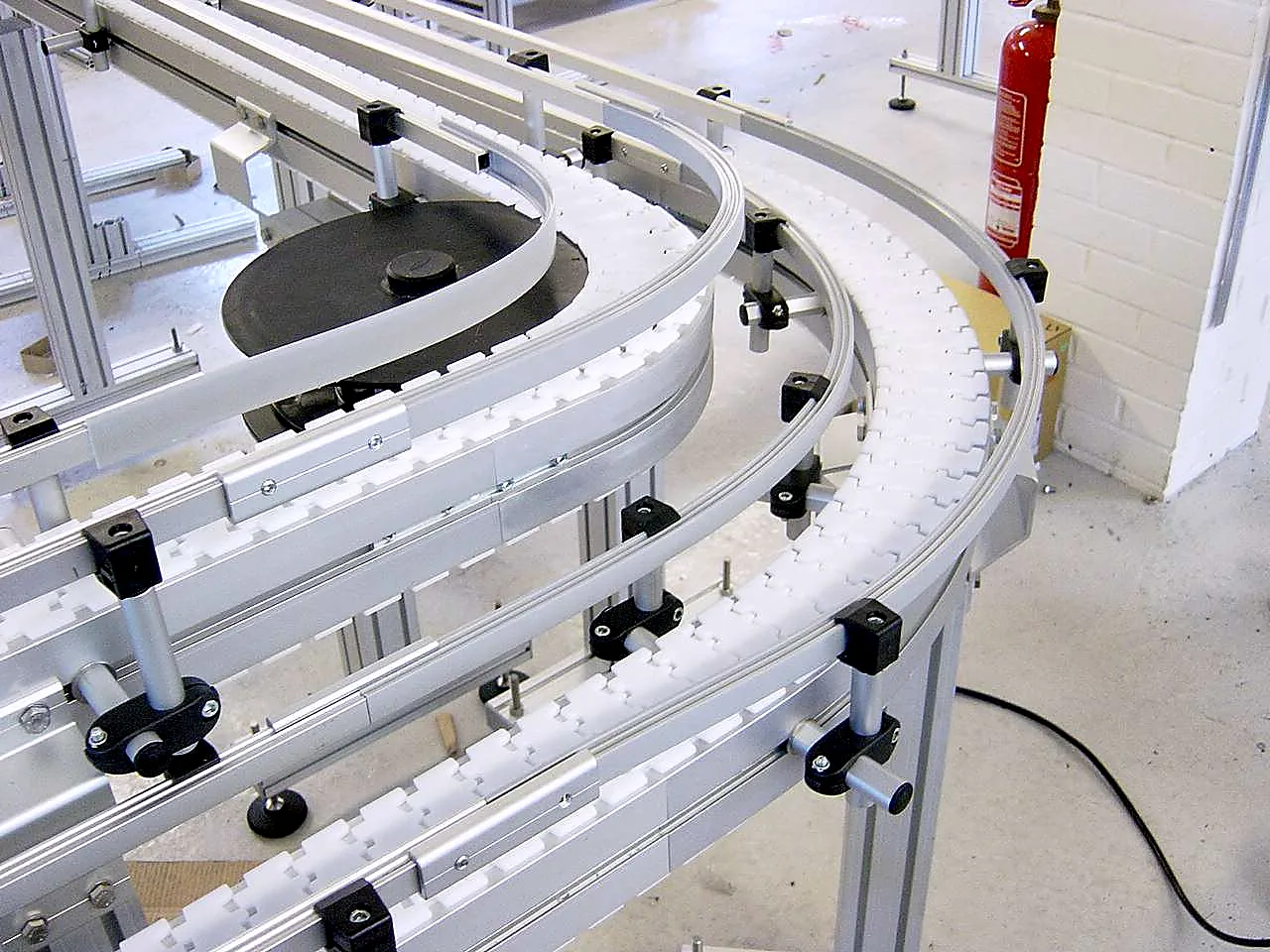
| Flexible plastic chain | Single-file routes connecting machines through straight sections and curves. | Product support on the chain top, guide contact, curve geometry, and behavior at each transfer. |
| Tabletop or slat chain | Bottles, cans, and other packages supported on linked tops; straight or curved layouts where the selected chain permits. | Top material, joint openings, usable support width, side-flexing capability, and product contact while queued. |
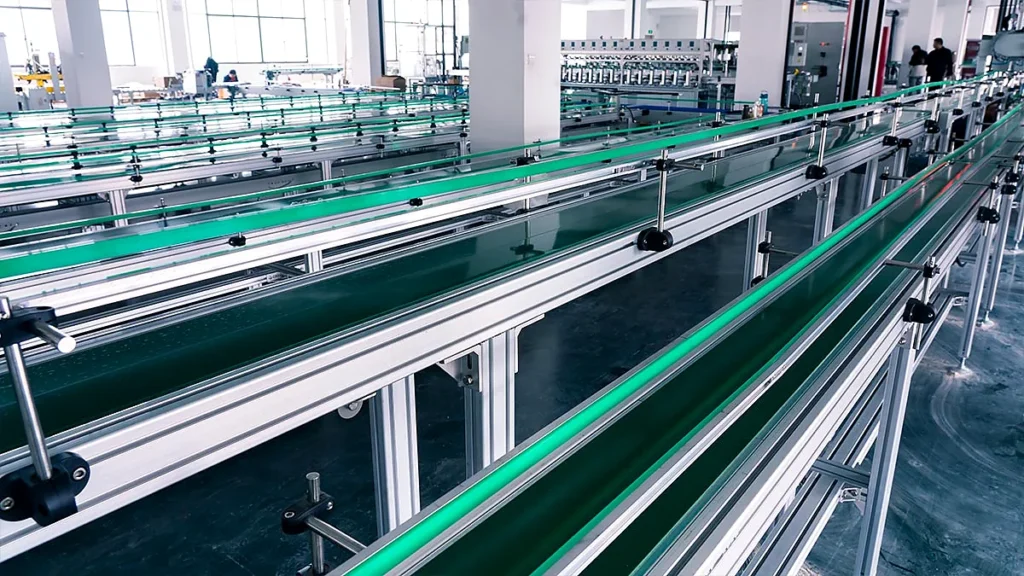
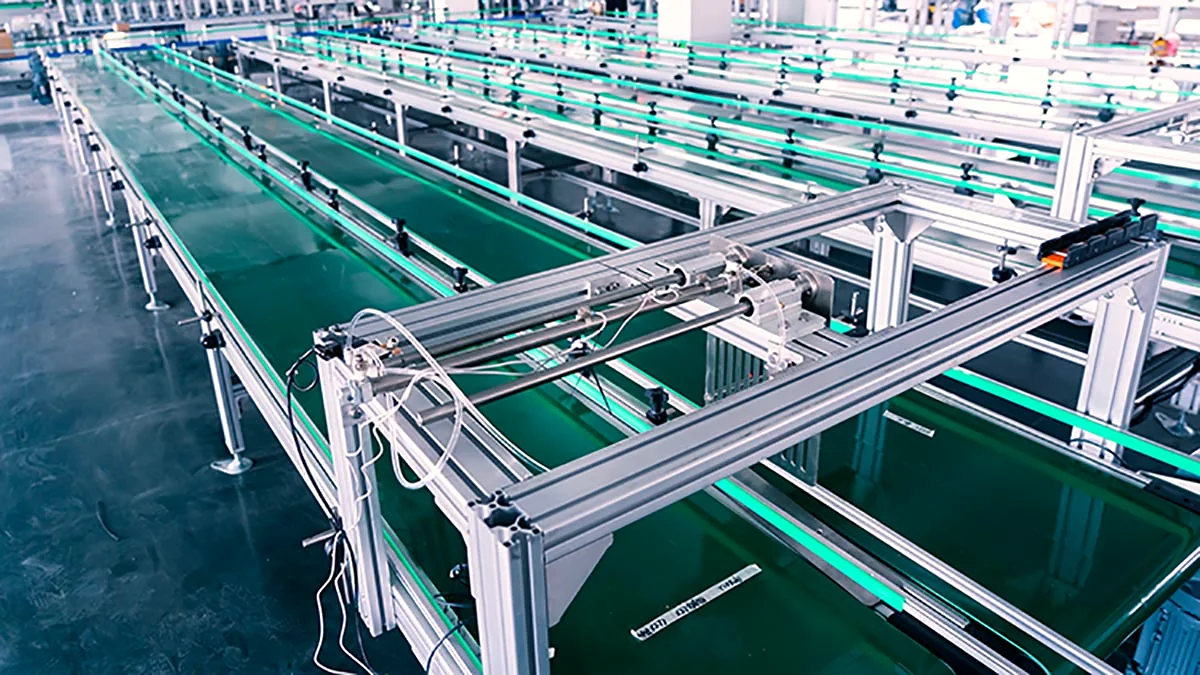
| Continuous flat belt | Packages that benefit from a continuous contact surface, including items whose bases need support across the conveying width. | Surface grip, tracking and support, joint or splice construction, end geometry, and route limitations of the selected design. |
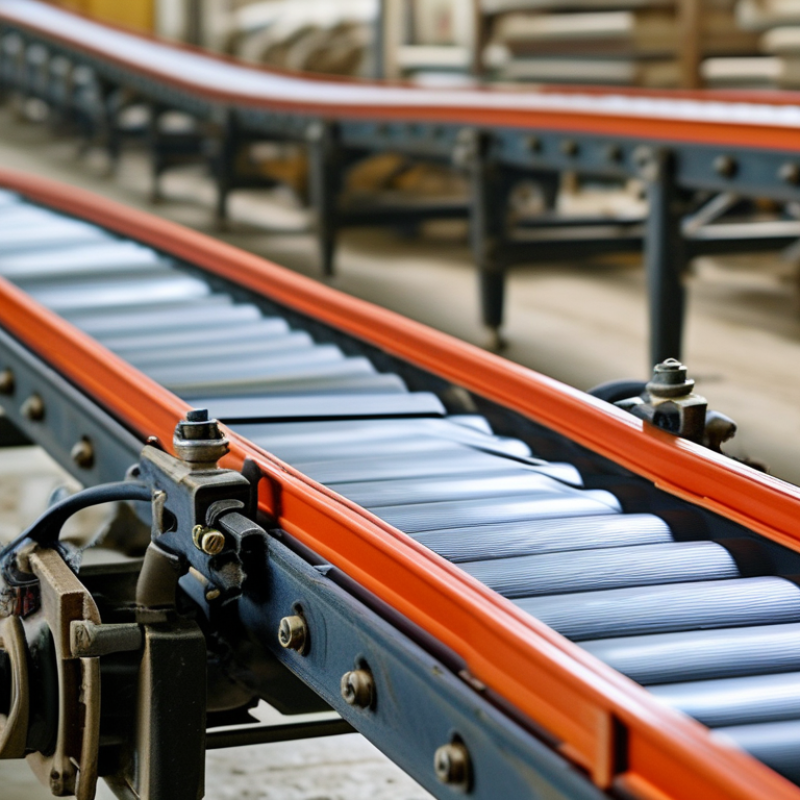
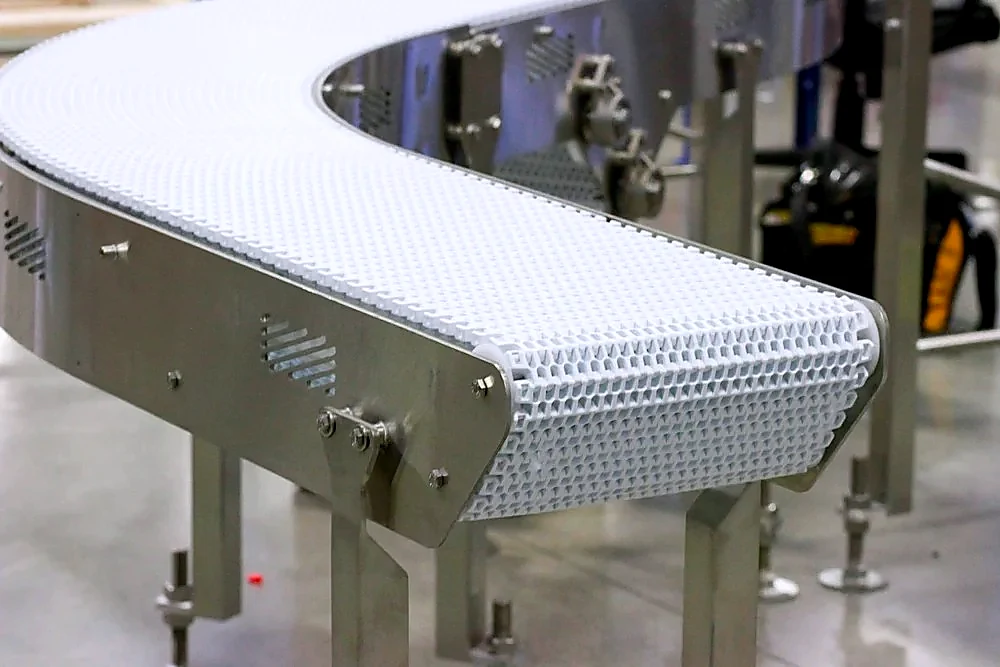
| Modular plastic belt | Packages carried on an assembled plastic surface, with straight-running or curve-capable designs selected for the route. | Module openings and pitch, product support, sprocket and return arrangement, and whether that belt is designed to turn. |
These categories narrow the choices; they do not establish a universal ranking for load, speed, cleanliness, or cost. The selected surface, supporting structure, drive, and product handling arrangement determine whether a particular conveyor fits.
Start With the Product Base and Route
Check the Smallest and Least Stable Product
Record the base dimensions and shape, weight range, center of gravity, and the surface that will actually contact the conveyor. A carton with a broad, flat base presents a different support problem from a bottle with a recessed base or a pouch with an uneven underside.
Check the smallest product as well as the largest. Its base may bridge some joints but catch at an opening or lose support at an end transfer. Tall containers also need to remain stable as the route turns and the guides contact them. If scuffing, printed surfaces, or soft packaging matter, evaluate those contact points with representative samples.
Trace the Entire Route
Mark horizontal turns, elevation changes, machine inlets and outlets, access points, and the required product orientation. Flexible chain can be useful for connected routes with bends. Some modular belts also turn; a straight-running modular belt cannot be assumed to do so. Continuous-belt curves likewise require a design intended for that route.
Compare complete layouts, including their transfers. A surface that works well on a straight run may require a different end arrangement or additional conveyor sections to connect the same machines. Confirm the actual curve radius, guide arrangement, and available footprint with the proposed equipment rather than applying a generic minimum.
Check Transfers and Queuing Together
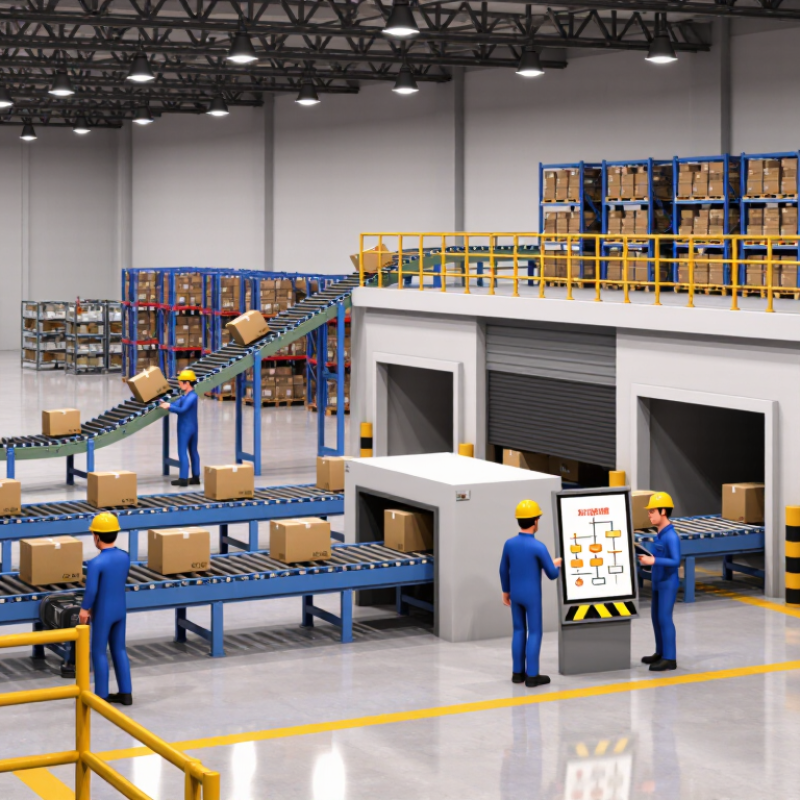
At each handoff, consider the unsupported distance, changes in height, travel direction, speed, and side-guide position. The package must leave one surface and establish support on the next. A short, stable carton and a tall, narrow bottle may need different arrangements at the same interface. Review the smallest package and the least stable one across the proposed handoff.
Transfer performance also changes when the next machine stops. If the conveyor keeps moving beneath stationary products, the product slides on the carrying surface. That contact can affect scuffing and the force passed along the queue. It is a different issue from a belt slipping on its drive pulley.
A chain surface is not automatically suitable for every accumulation task, and a belt line is not automatically excluded. Establish whether products can touch, whether they may remain over a moving surface, and how stops and restarts will be controlled. See the guides to conveyor transfers and accumulation conveyor systems for these separate design questions.
Treat Cleaning and Maintenance as System Questions
Choose materials for the actual product, temperature, moisture, and cleaning chemicals involved. Then consider access to the underside, return path, supports, guides, and joints. A smooth carrying surface alone does not establish how readily the whole conveyor can be cleaned.
Maintenance access also deserves a layout check. Identify how the selected chain or belt is joined, where it can be removed, and which guides or surrounding equipment restrict access. Modular construction may allow a damaged section to be replaced, but the available working space and the manufacturer’s procedure still govern the task.
Changing from one carrying surface to another can affect sprockets or pulleys, wear supports, end geometry, the return path, and guides. Compare the complete compatible conveyor arrangement rather than treating a chain-to-belt change as a surface-only swap.
Send an Application Brief Before Selecting a Conveyor
Provide a product list with dimensions and weights, base photographs or samples, a route drawing, inlet and outlet details, required flow, expected downstream stops, and the cleaning environment. Include the product’s required orientation and any limits on contact, marking, or queuing. These inputs let the supplier assess the surface and its interfaces together.
For equipment options, review our flexible chain conveyors, slat chain conveyors, PVC/PU belt conveyors, and modular belt conveyors. If you are choosing a conveyor section or connecting several machines, send the application details to CSTRANS. For an existing conveyor that only needs a replacement chain, belt, or accessory, use the csbelts component range and provide the identification and dimensions needed to check a match.