
Flexible Chain Conveyor Systems
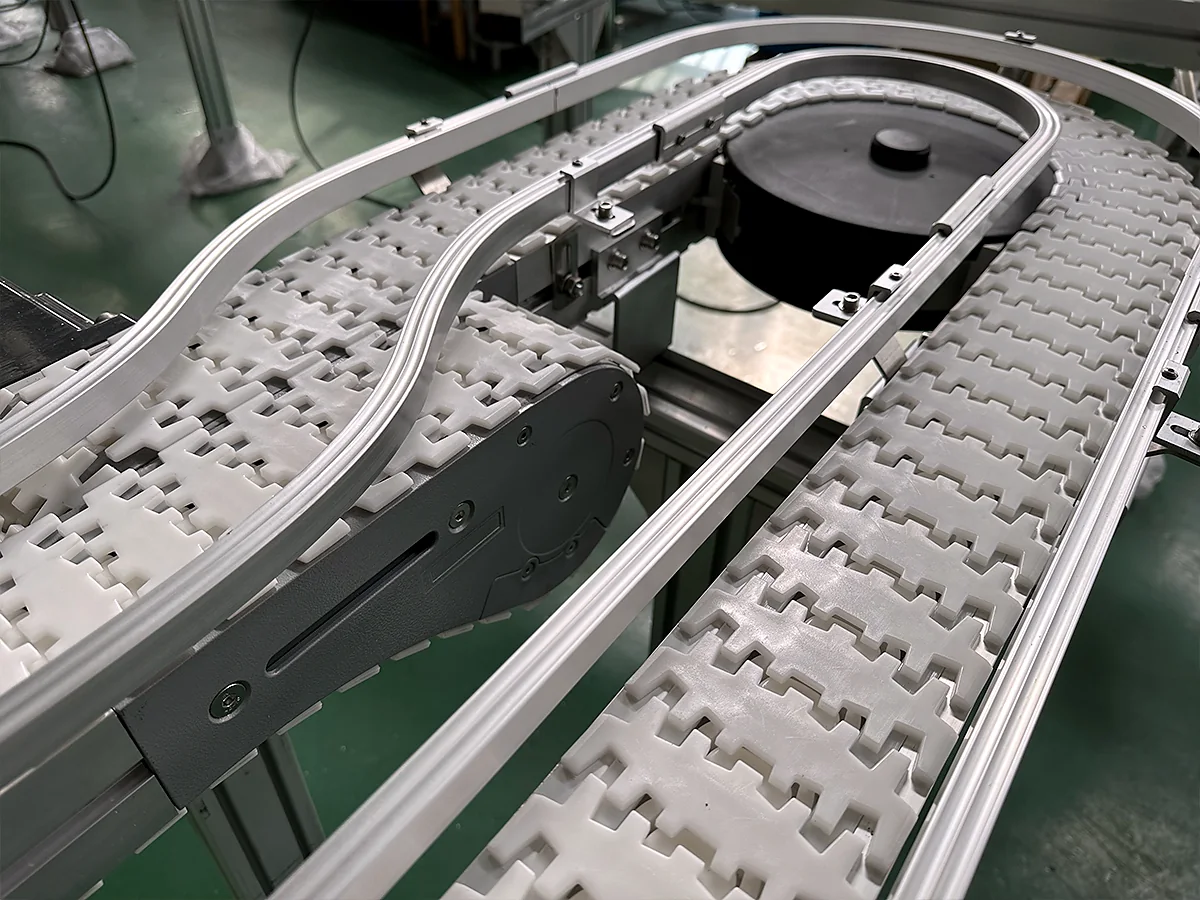
CSTRANS flexible chain conveyors carry products along straight sections and bends between production or packaging machines. The linked plastic chain follows the route, while the carrying surface and guide rails support the product through turns and transfers.
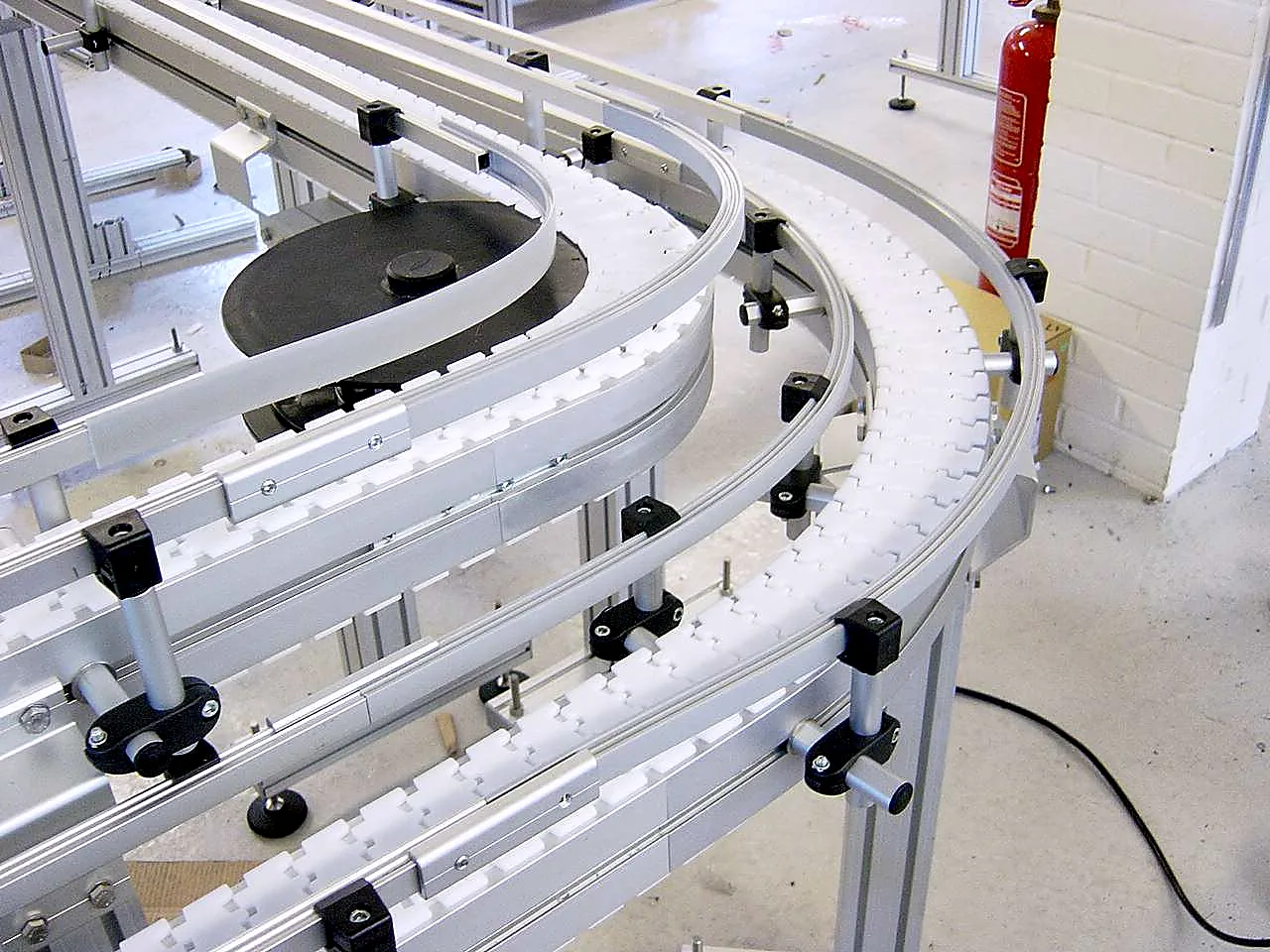
CSTRANS Flexible Conveyor Systems
Our range includes the plastic chain flexible conveyor system and custom flexible chain plate conveyor. Each system is configured for the product, available space and connecting equipment.
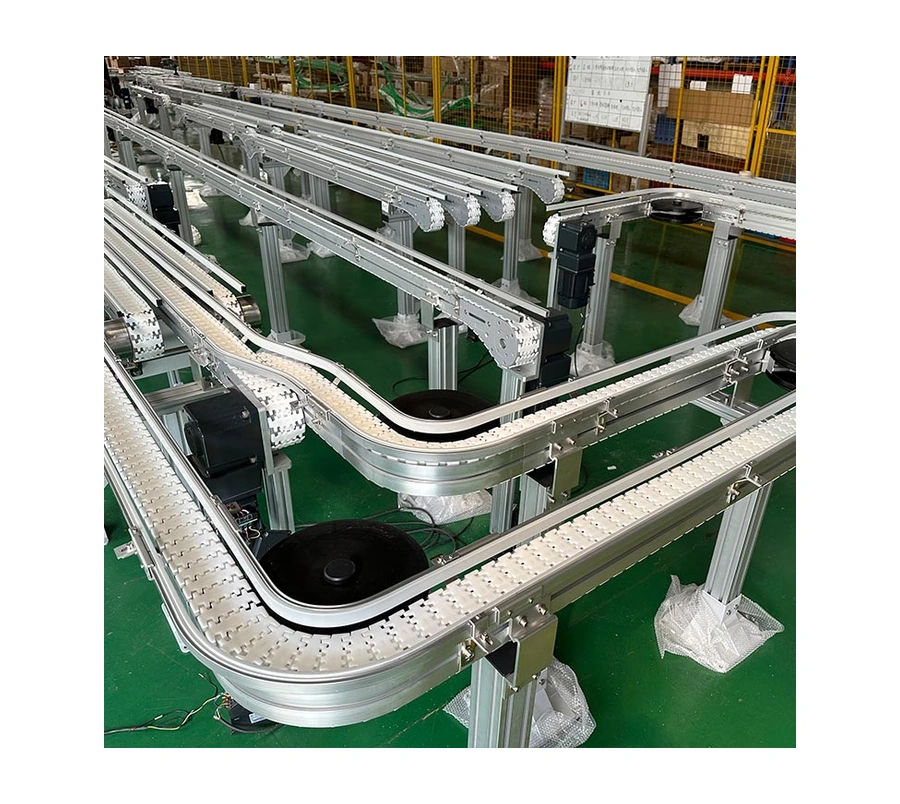
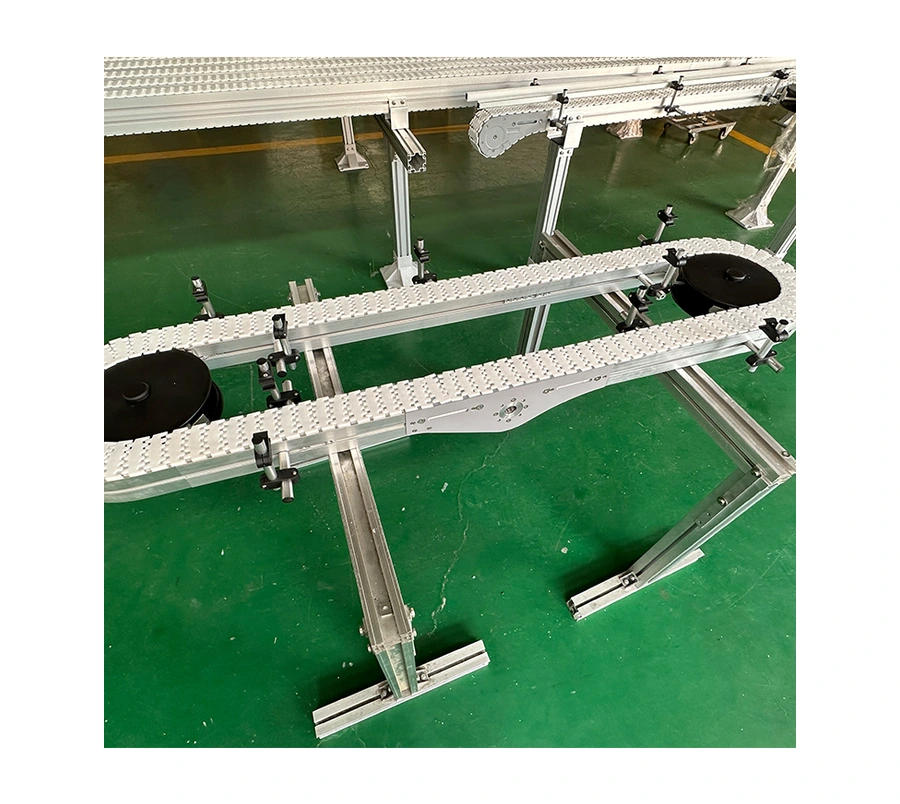
Chain Support Through Bends and Transfers
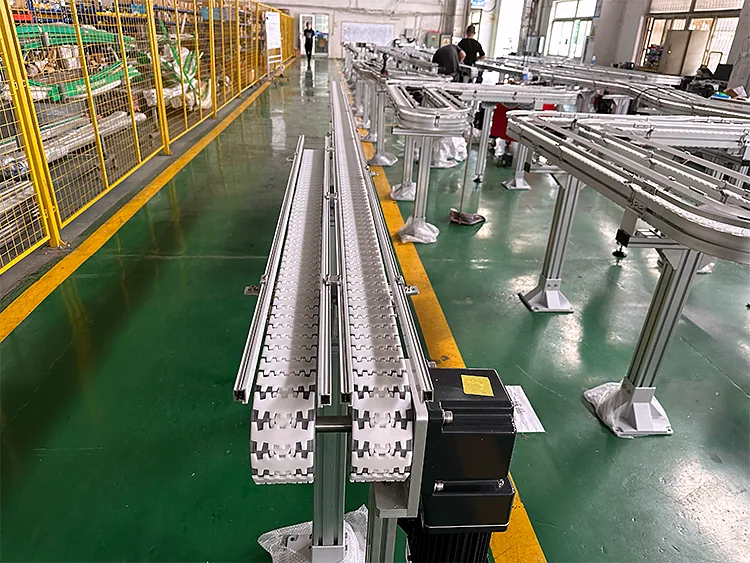
Chain and Bend Assembly
In CSTRANS flexible chain conveyors, the chain runs on PE wear strips fitted to the conveyor beam. These strips support the chain and provide its sliding surface; side guide rails control the product position. The chain profile, beam and wear strip must match. Our 140 mm flat-top and toothed chain versions use different supporting components.
Horizontal bends can use a wheel or a sliding guide. For 63, 83 and 103 mm chains, bends without a wheel require a minimum radius of 300 mm. Other chain sizes and bend assemblies have their own radius requirements. Specify the bend angle, centerline radius and straight entry and exit lengths together when planning the route.
Product Support at Machine Transfers
At each transfer, the product base has to bridge the gap while the receiving conveyor takes over support. Product width, underside shape and operating weight determine the carrying surface and guide positions. The smallest supporting footprint needs particular attention at the gap. The guide arrangement and infeed and outfeed heights must keep the product supported and facing the required direction through the hand-off.
CSTRANS flexible conveyor systems can be configured with automatically adjustable guide rails, transfer mechanisms for prismatic battery cells, and lane-changing mechanisms for cylindrical cells. Stops, positioning and buffer sections are also available for the application. The selected mechanisms need to match the connecting machines, product dimensions and required feed rate.
Plastic Chain Conveyor Specifications
The Plastic Chain Flexible Conveyor System has the following construction and configuration options.
| Parameter | Specification or Option |
|---|---|
| Conveyor width | 44–295 mm |
| Chain material | POM (polyoxymethylene) |
| Conveyor beam | Aluminum or stainless steel profiles |
| Chain support | Low-friction plastic slide rails |
| Product transport | Directly on the chain or on pallets, depending on the application |
| Product guidance | Adjustable side guide rails |
| Chain surface options | High-friction surfaces for inclines; roller surfaces for accumulation; stainless steel covers for sharp-edged products |
| Further options | Surfaces for delicate products, flexible cleats for clamping, magnetic links for magnetizable components, and drip trays |
The custom flexible chain plate conveyor offers adjustable conveying speed and adjustable support legs. Contact CSTRANS for FDA-related documentation for the selected plastic conveying material. Tell us which surfaces contact the food, the operating temperature and the cleaning method so the material and equipment configuration can be reviewed together. For a high-friction incline, include the proposed slope, loaded weight, moisture, oil or residue at the contact surface, and where products stop. Surface choice needs to be reviewed with these conditions. For a POM-chain enquiry, identify substances that will contact the chain.
Discuss Your Conveyor Project
Send your layout and the system you are considering. Include the straight sections, turns, height changes and space available for the equipment and maintenance access.
For the products, include dimensions, operating weight, photographs of the underside and the direction each item must face. On a multi-product line, the widest item and the smallest supporting footprint can set different limits. Show every base shape and the size and weight range, including empty and filled conditions where relevant.
Mark each transfer on the layout with its infeed and outfeed heights, gap, supporting surface and required product orientation. Drawings of the adjoining machines help us review each hand-off. Add the required products per minute, peak feed rate and where products should wait when the next machine stops. Describe any connection or handling issue that remains unresolved. Use the plastic flexible conveyor layout and selection guide to prepare the enquiry brief.
Send a Flexible Chain Conveyor Enquiry
Leave Your Message
For a carrying surface assembled from interlocking plastic modules, compare our modular belt conveyors. For replacement chain or individual components, use the systems and components directory. For replacement parts, include the existing chain series, profile and width, with photographs of the beam and wear strips.