
Roller Conveyor Systems
Roller conveyor systems carry cartons, cases and other loads on a series of rollers. A firm, stable base allows the load to rest across the rollers as it moves. CSTRANS supplies powered roller equipment and a flexible retractable roller conveyor, alongside logistics sorting equipment. Where a pallet must rise from its running surface before moving across the line, define the lifting and transverse transfer interfaces separately from a curved conveyor route.
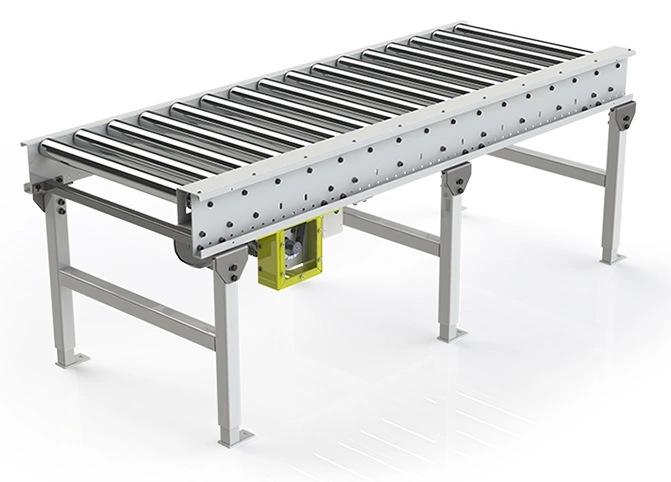
CSTRANS Roller Conveyors
Powered roller conveyors use driven rollers to move the load along the line. Our standard roller conveyor has motor-driven options for fixed routes between workstations. The travel direction and stop/start behavior depend on the requirements at those workstations.
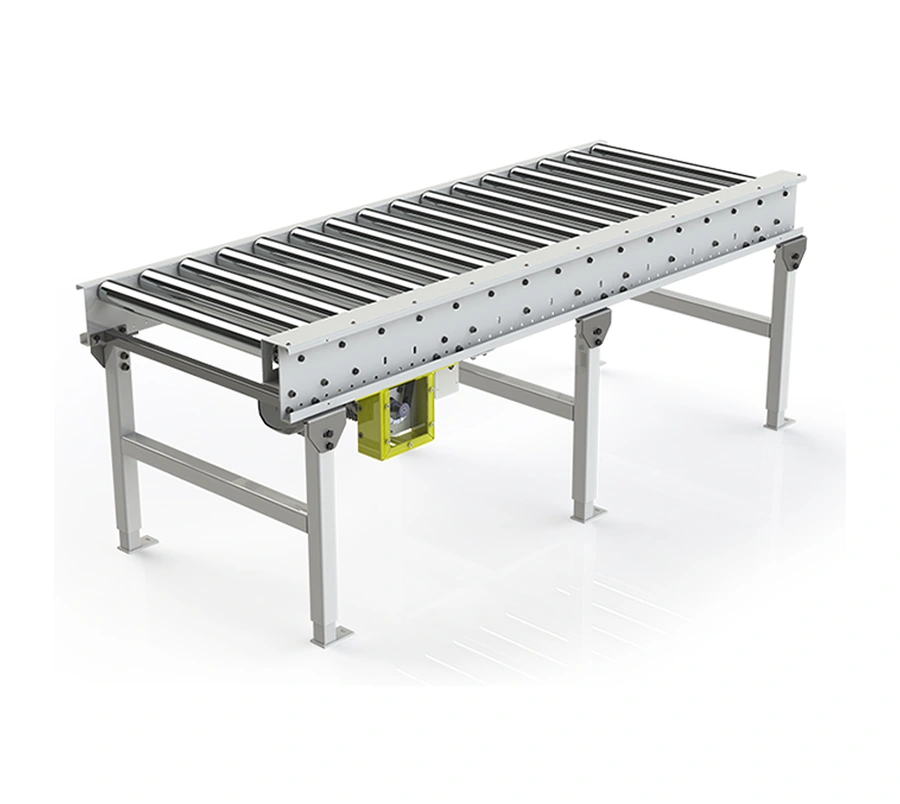
Standard Roller Conveyor Specifications
| Parameter | Specification |
|---|---|
| Conveying Speed | 3–8 m/min |
| Maximum Conveyor Width | 1,200 mm |
| Maximum Capacity | 150 kg/m |
| Motor Power | 35 / 40 / 50 / 80 W |
| Ambient Temperature | 5–50°C |
Standard Roller Conveyor Construction
| Assembly | Construction Options |
|---|---|
| Drive | Geared motor drive or motorized roller drive |
| Transmission | Round belt, Poly-V belt, timing belt or chain transmission |
| Frame | Carbon steel, stainless steel or aluminum |
| Rollers | Galvanized carbon steel or stainless steel |
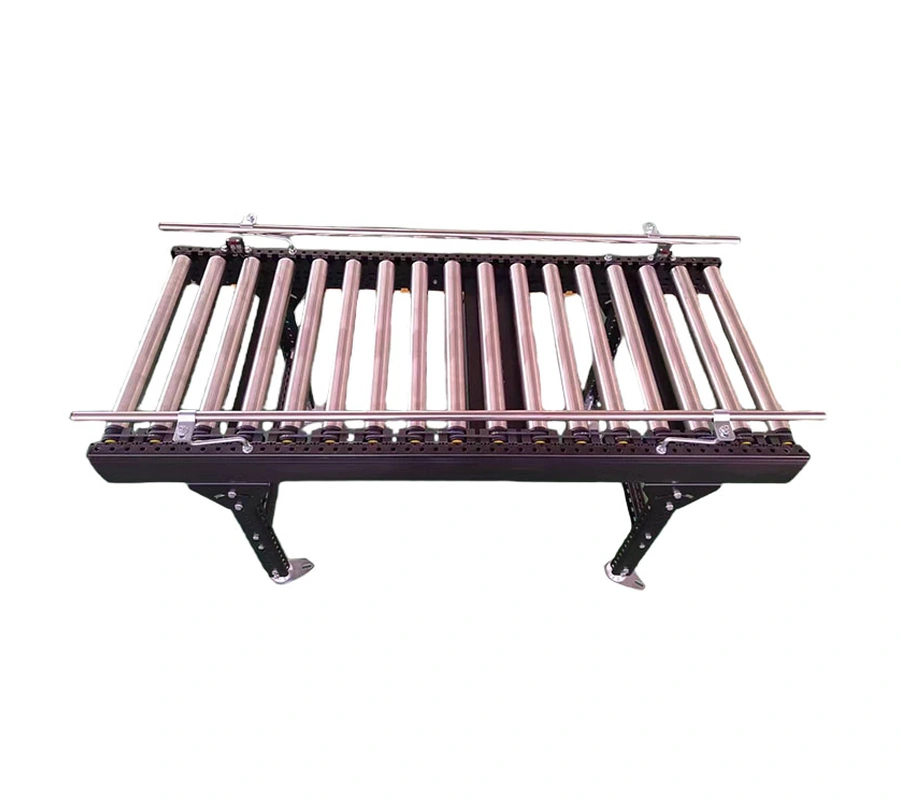
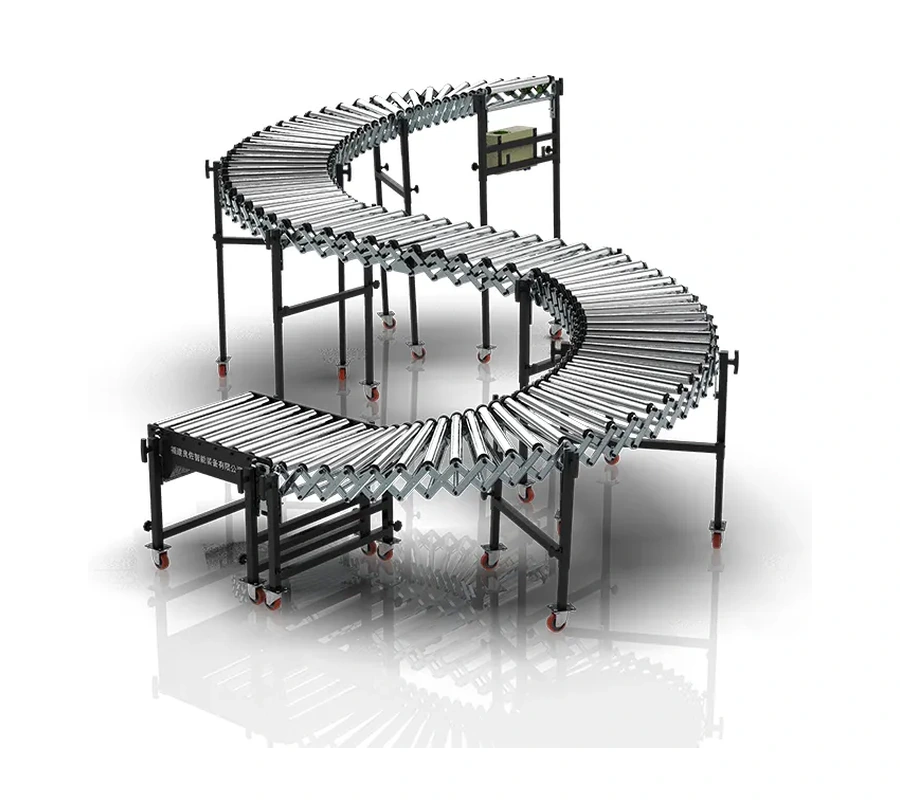
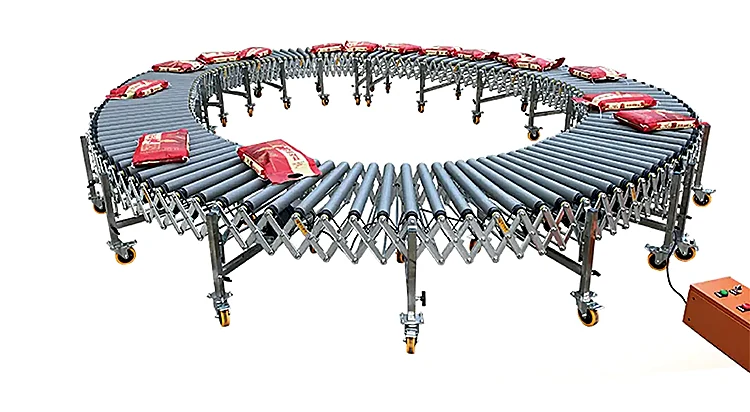
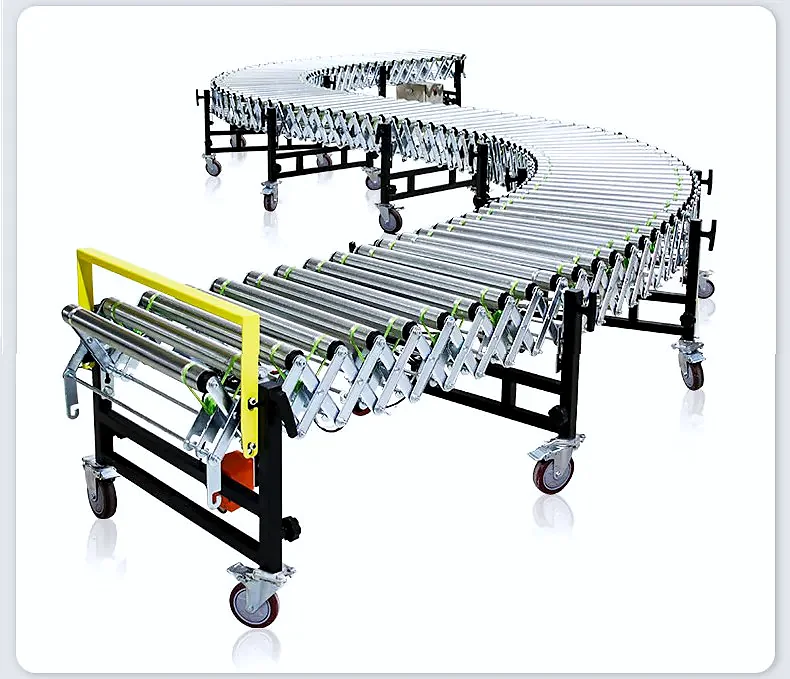
The flexible retractable roller conveyor extends and changes direction to suit a variable route. Its working length and shape, together with the space needed when retracted, are part of the layout.
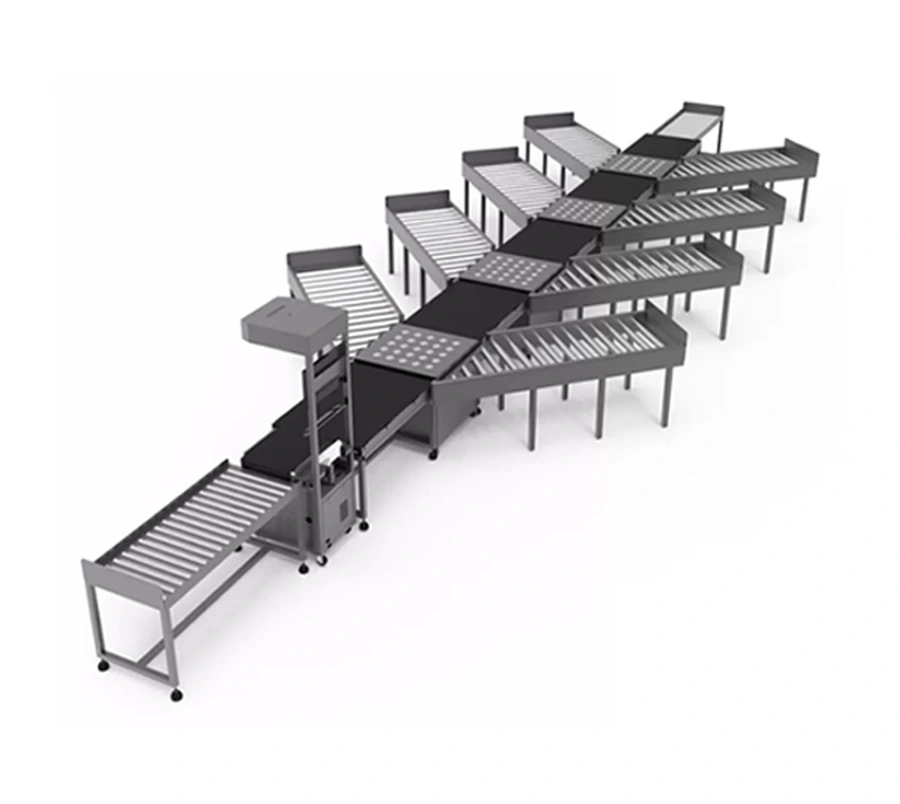
Our logistics sorting conveyor line is a related option for directing packages to different destinations. The destinations and method of identifying each package need to be specified for the sorting task.
Pallet Accumulation and Return Routes
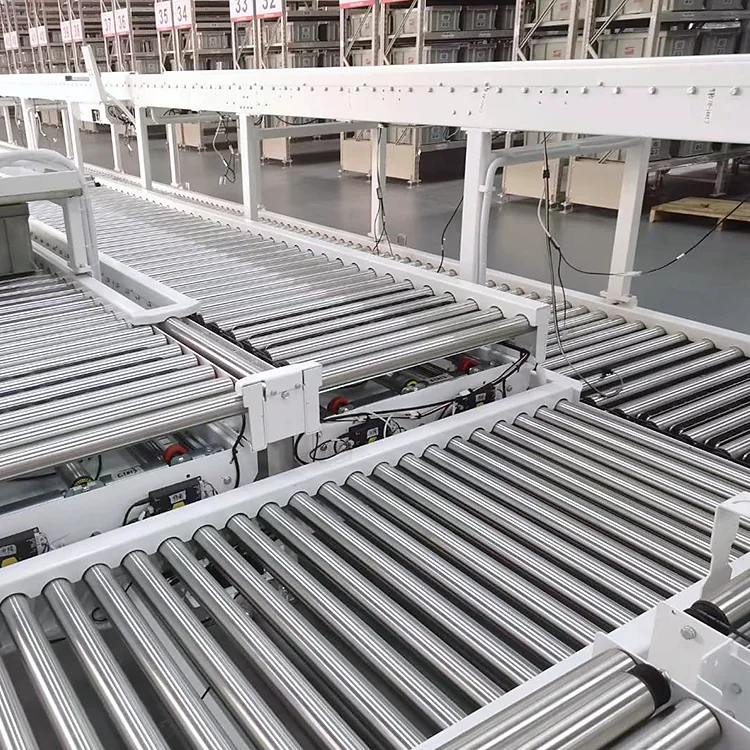
CSTRANS friction-roller lines allow a stop to hold a pallet while the line motor continues running. Some pallets can wait while others move within the same conveyor section. The friction drive and workstation stop control when a pallet waits and when it moves on.
For pallet circulation, an end lift can connect an upper production route to a lower empty-pallet return. Stops, anti-rollback devices and positioning mechanisms can be combined at the workstations. The return route and end transfers need to accommodate the same pallet geometry as the production route.
Package Support on Extended and Curved Routes
Rollers support a package at intervals along its base. Feet or ribs change the points of contact, while a soft base may change shape under load. These features affect the support needed during travel and at transfers.
Photos of a loaded package's base show contact features that its outer dimensions cannot describe. The smallest and largest packages, their weights, and any feet, ribs or soft areas all matter when assessing support.
A retractable conveyor's working geometry changes as it extends and bends. Roller spacing and usable width need to be checked in that operating position against the smallest and largest packages. Entry and exit heights determine how it connects to the next conveyor. For a curved roller requirement, state whether the curve remains fixed in position or the conveyor must extend and change shape. Show the turn angle, available radius, usable width and package support through the bend.
A bend in the conveyor route and a change in the product’s own orientation are different requirements. State any required product rotation or turnover separately; the route angle alone does not confirm that handling function.
Roller Conveyor Enquiry
Send package photos and a layout showing the working position, bends and transfer heights. Please include the package rate, required spacing and what should happen when the receiving equipment stops. The operating environment and cleaning method are also needed to discuss the roller and frame configuration.
Contact CSTRANS
Leave Your Message
Belt conveyors provide another carrying-surface option. Other equipment types are available in our conveyor systems range.