
Slat Chain and Tabletop Conveyors
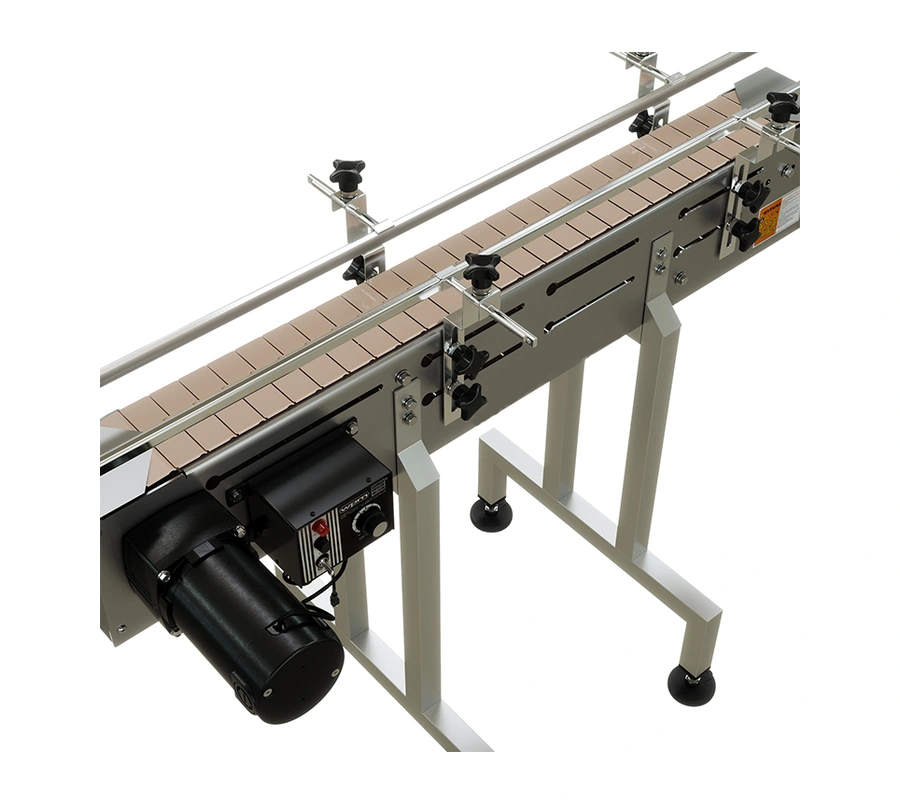
Tabletop chain conveyors carry bottles, containers and packaged products on linked flat-top chain plates.
Explore Conveyor Types
Our range includes stainless-steel top chain, plastic straight and turning chain, case-chain and roller-top chain conveyors.
Specifications by Chain Type
The supporting footprint, route and transfers determine the chain and guide arrangement.
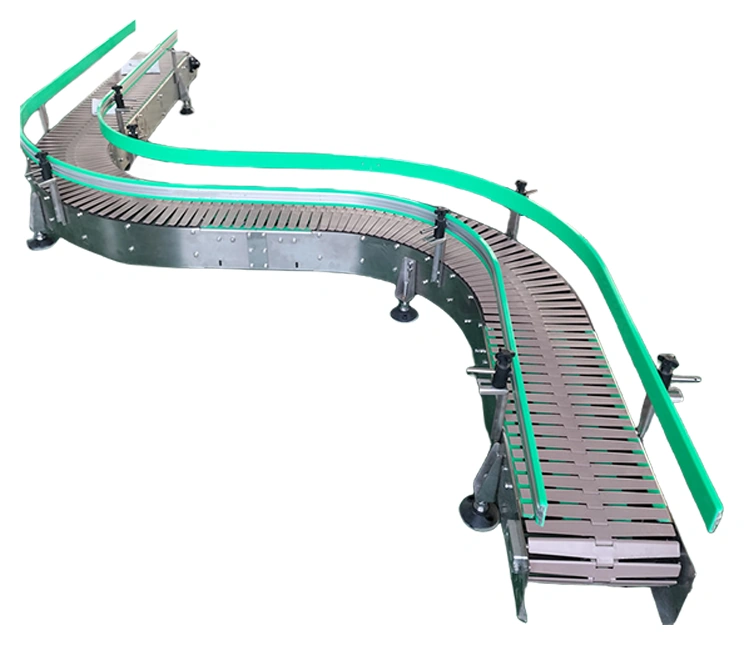
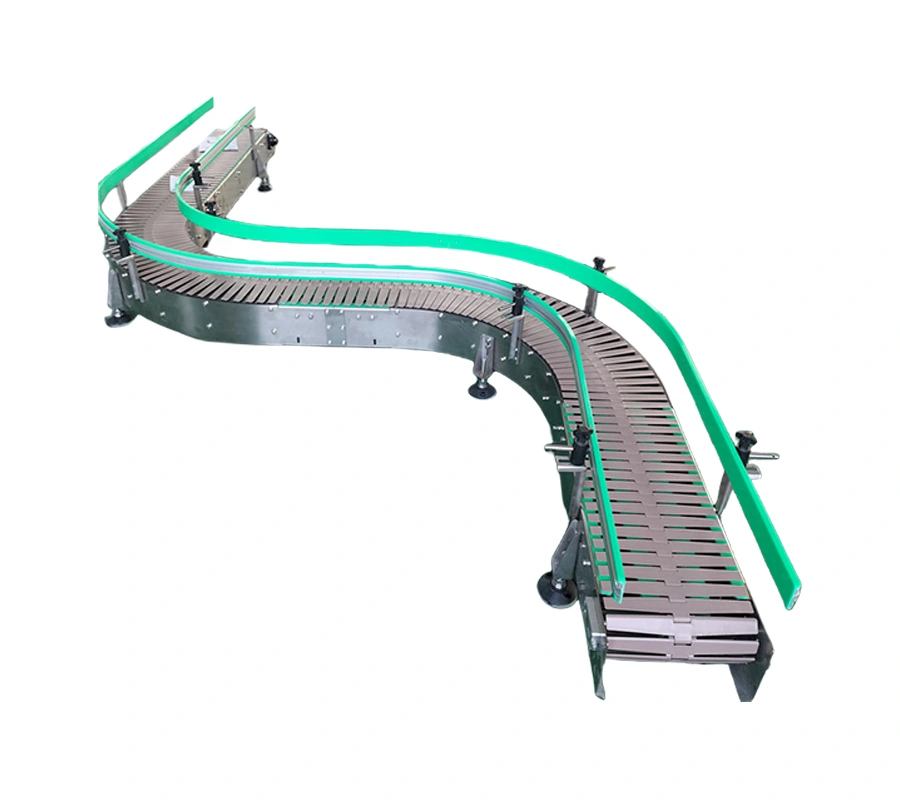
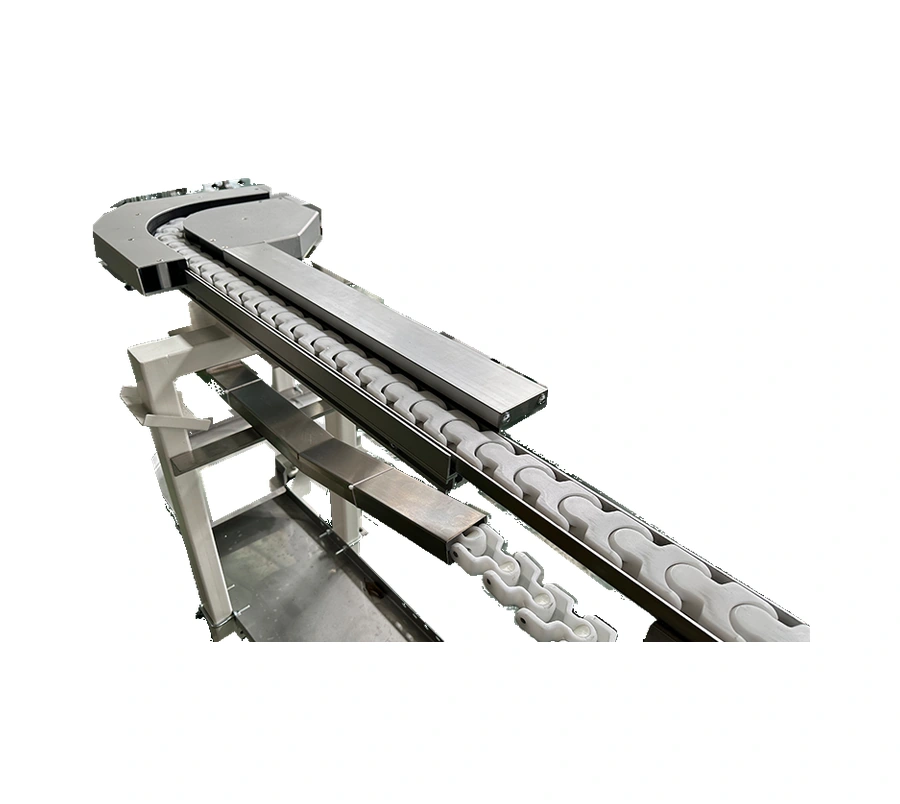
Plastic Turning Slat Conveyor
| Parameter | Specification |
|---|---|
| Conveyor Widths | 76.2 / 86.2 / 101.6 / 152.4 / 190.5 mm |
| Chain Material | Plastic |
| Route | Straight and side-flexing sections; S-shaped layouts |
| Wider Carrying Surfaces | Multiple rows of flat-top chain |
Metal Top Chain
| Parameter | Specification |
|---|---|
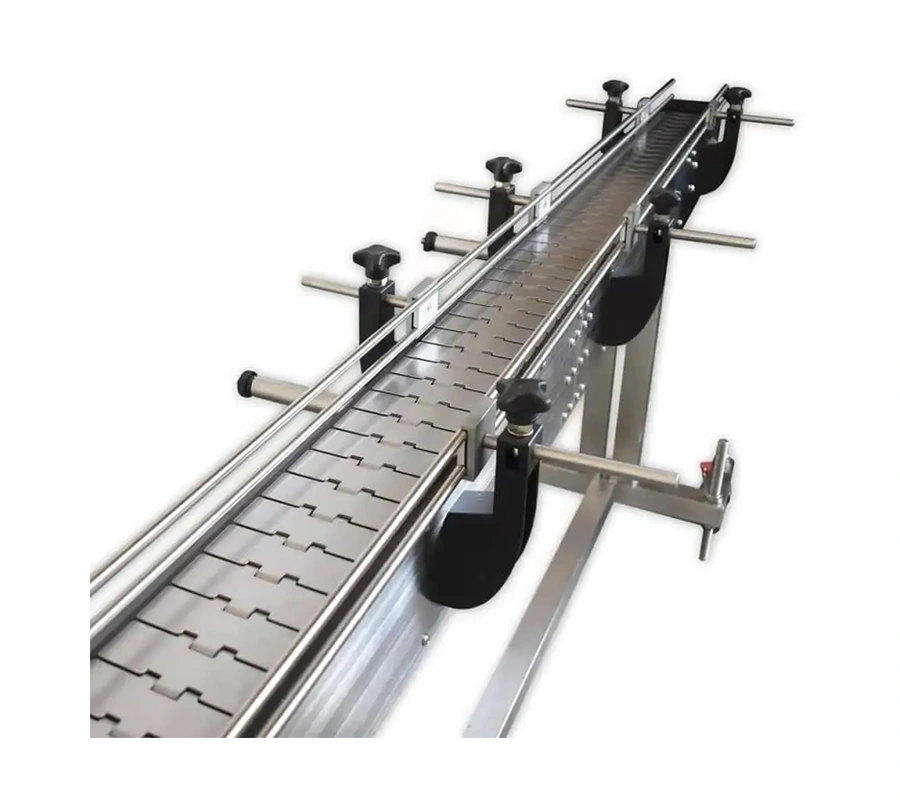
| Chain Materials | Carbon steel, galvanized steel, 201 stainless steel, 304 stainless steel |
| Chain Plate Pitch | 25.4 / 31.75 / 38.1 / 50.8 / 76.2 mm |
| Chain Plate Thickness | 1 / 1.5 / 2 / 2.5 / 3 mm |
| Plate Styles | Flat, perforated and baffled |
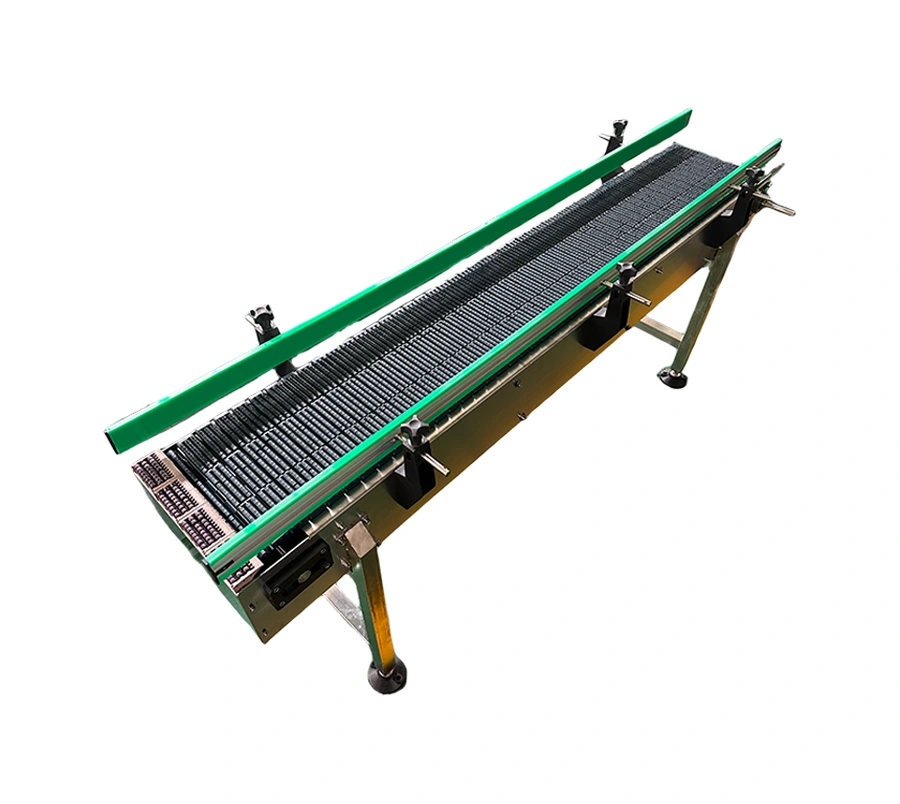
The plastic straight tabletop conveyor carries products along a straight route. The plastic turning slat-top conveyor follows a change in direction. Straight-running and side-flexing chain arrangements serve different routes: a bend requires a chain and guides designed for that turn, with a surface suited to the product resting on it.
The stainless-steel top chain conveyor, case-chain and roller-top models offer other chain-surface choices. The carrying surface, chain layout and guides define how each model supports the product.
Chain, Sprocket and Guide Construction
Chain and Sprocket Matching
The chain's flat plates are joined by hinge pins, and drive sprockets engage the chain to move it along the conveyor. CSTRANS tabletop chain options include POM plastic and stainless-steel versions. Straight-running chains can have single- or double-hinge arrangements; the hinge and plate geometry determine which supporting and driving components fit. In a chain-driven roller conveyor, the chain transmits motion to the rollers.
Drive and Idler Compatibility
Sprockets also need to match the chain series. Similar chain widths do not establish interchangeability: some chains share a drive sprocket but require different idler sprockets. Chain selection includes the carrying surface, hinge geometry and matching sprockets, as well as the product load and environment. For example, 880TAB and 882TAB require different matching sprockets.
Bends and Side Guides
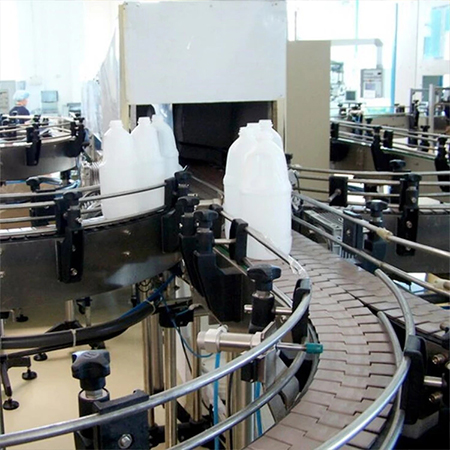
Side-flexing chains need a guide profile suited to their retaining arrangement. For example, a magnetic side-flexing configuration uses magnets in the guide to act on the chain pins. TAB-guided versions use a different chain and guide profile. The chain width, bend radius and straight entry and exit sections therefore have to be selected together.
Product Support at Conveyor Transfers
Product Base and Orientation
A product's supporting footprint can be smaller than its outer dimensions. Its base shape and direction of travel affect how much of the base remains supported as it crosses the gap to the next conveyor.
Overall dimensions and base photographs describe the product and the surface that rests on the chain. The required product orientation also matters at the hand-off. Where several sizes share a line, the smallest contact area and heaviest operating condition both need to be considered. For cases with feet or runners, show each contact point.
Adjoining Conveying Surfaces
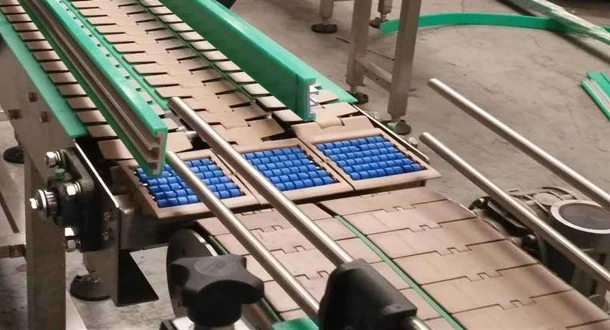
The transfer arrangement depends on the adjoining equipment, infeed and outfeed heights, and the gap between surfaces. Continuous movement and queuing while the next process stops also place different demands on the chain surface and guides.
Slat Chain Conveyor Enquiry
Send the product photographs and layout with the travel direction and transfer points marked. If the chain series is already selected, include its reference with the bend angle, centerline radius and straight entry and exit lengths.
Let us know which conveyor you are considering so the chain surface, guide arrangement and transfers can be discussed for that application. Specify the material grades separately for the carrying chain, frame, guides and fasteners. Include any material-document requirements for those specified parts.
Request a Slat Chain Conveyor Quote
Leave Your Message
Include production rate, accumulation periods, product-contact conditions, cleaning method, temperature and moisture exposure.
Individual conveyor chains and replacement components are available through the component catalogue. For a replacement request, provide the chain series, width and dimensions, with photographs of the hinge or TAB features, guide and drive and idler sprockets.